

How Hardware Marketers Use Webinars to Capture High-Value Leads

Hardware webinars bring in qualified leads when they solve a real engineering problem and show the product working live. Promote to the right engineers, co-host with partners, and follow up fast by lead priority.
Turn Hardware Webinars Into Qualified Leads
To generate leads with a hardware webinar, teach a specific buyer how to solve a technical problem. Promote the session to the right engineers and decision-makers, show the product working, and use polls and Q&A to learn who has an active project. Then follow up with a useful resource and a next step that fits their needs.
That approach gives buyers more than a spec sheet: they can see how the hardware works and ask whether it fits their use case. At CRISPx, we plug in as a founder's marketing and sales team so you don't need a head of marketing.

How Hardware Webinars Help Buyers Evaluate Your Product
Selling physical computing platforms, industrial sensors, robotics, and embedded systems comes with specific challenges. Buying committees include hardware engineers, firmware architects, procurement managers, and systems integrators. Long sales cycles stall when prospective buyers struggle to verify edge cases or performance claims from static documentation alone.
Three core problems derail hardware companies:
- The launch falls flat: The product is ready, but the story is not.
- Growth stalls: Sales jump right after launch, then quickly fade.
- People don't get it: The website reads like a spec sheet instead of explaining what the hardware actually achieves for the buyer.
Using hardware webinars for lead generation can help address these issues. A live technical demonstration shows buyers how the product performs under the conditions shown. It lets your engineering team show real-time telemetry, walk through schematic trade-offs, and address integration doubts directly.
| Lead Generation Channel | Cost Per Qualified Lead | Speed Through the Sales Process | How Much Buyers Can Verify | Buying Committee Reach |
|---|---|---|---|---|
| Hardware Webinars | Low to Moderate | High (Direct Demo & Q&A) | Deep (Live benchtop telemetry & code) | High (Several buying-team roles can attend) |
| Trade Shows & Expos | High (Booth, travel, staff) | Moderate (Fragmented follow-up) | Moderate (Noisy floor, brief talks) | Moderate (Only traveling reps) |
| Static Whitepapers | Moderate (Distribution through other publishers) | Low (Passive reading) | Low (Static claims, no interaction) | Low (Single-reader distribution) |
Evaluating Cost and Conversion Efficiency Across Marketing Tactics
Trade show booths cost tens of thousands of dollars in floor space, logistics, and staff travel. Often, teams return with badge scans from attendees who were simply collecting promotional swag. Whitepapers gather contact information, but they fail to show whether a reader has an active design cycle or just an academic interest.
A technical webinar lets interested buyers evaluate the product without traveling to a trade show. You can host a session on the GlobalSpec engineering webinar platform to reach an engineering audience.
To assess whether the webinar supports sales, focus on tracking marketing performance. Track registration conversion rates, live attendee retention, interactive poll responses, and the time from attendance to shipping an evaluation unit.
How Technical Demos Add Proof to Spec Sheets
Engineers are inherently skeptical. When a website or brochure claims an embedded edge-AI sensor processes inference models in sub-five milliseconds with minimal thermal rise, engineers want proof.
Support your B2B brand building strategy with tests that buyers can watch and question. A live hardware webinar lets you show:
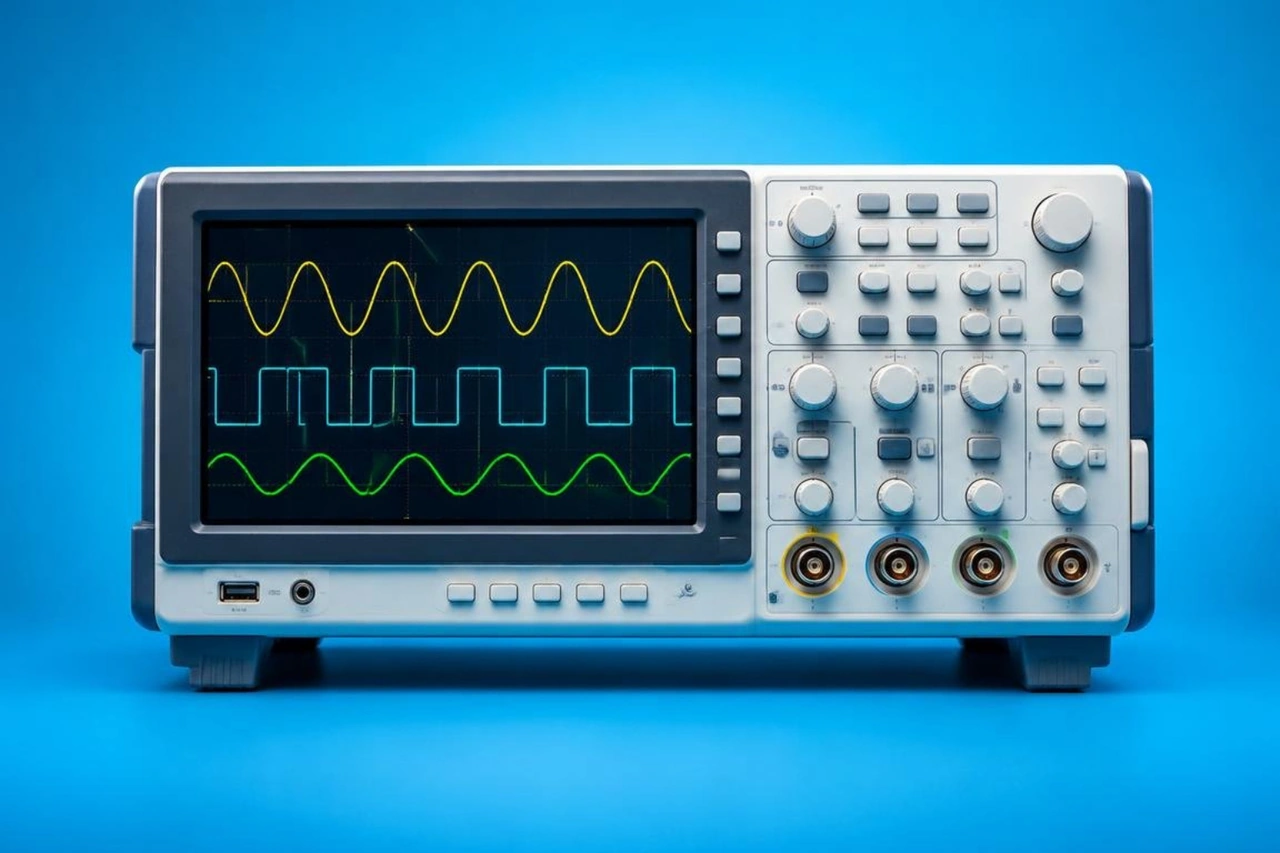
- Real oscilloscope waveforms and signal integrity captures.
- Dynamic thermal imaging under continuous operating load.
- Step-by-step firmware bring-up using standard development kits.
- Direct comparisons between simulated design outputs and benchtop reality.
When you lead with what the product does for the buyer and back it up with live, verifiable engineering data, buyers can more easily assess whether the product fits their needs.
How to Promote and Structure Technical Sessions
Promote the session to engineers working on the problem it addresses. Explain the technical challenge you will cover and what attendees will learn.

Choosing a Hardware Webinar Topic Buyers Need
Choose a topic focused on an engineering bottleneck. Great sessions explore architectural tradeoffs, thermal management, power efficiency, or edge compute integration.
Look at industry examples for inspiration. Sessions like LMI Technologies' AI inspection webinar show how to put AI inspection to work on the factory floor.
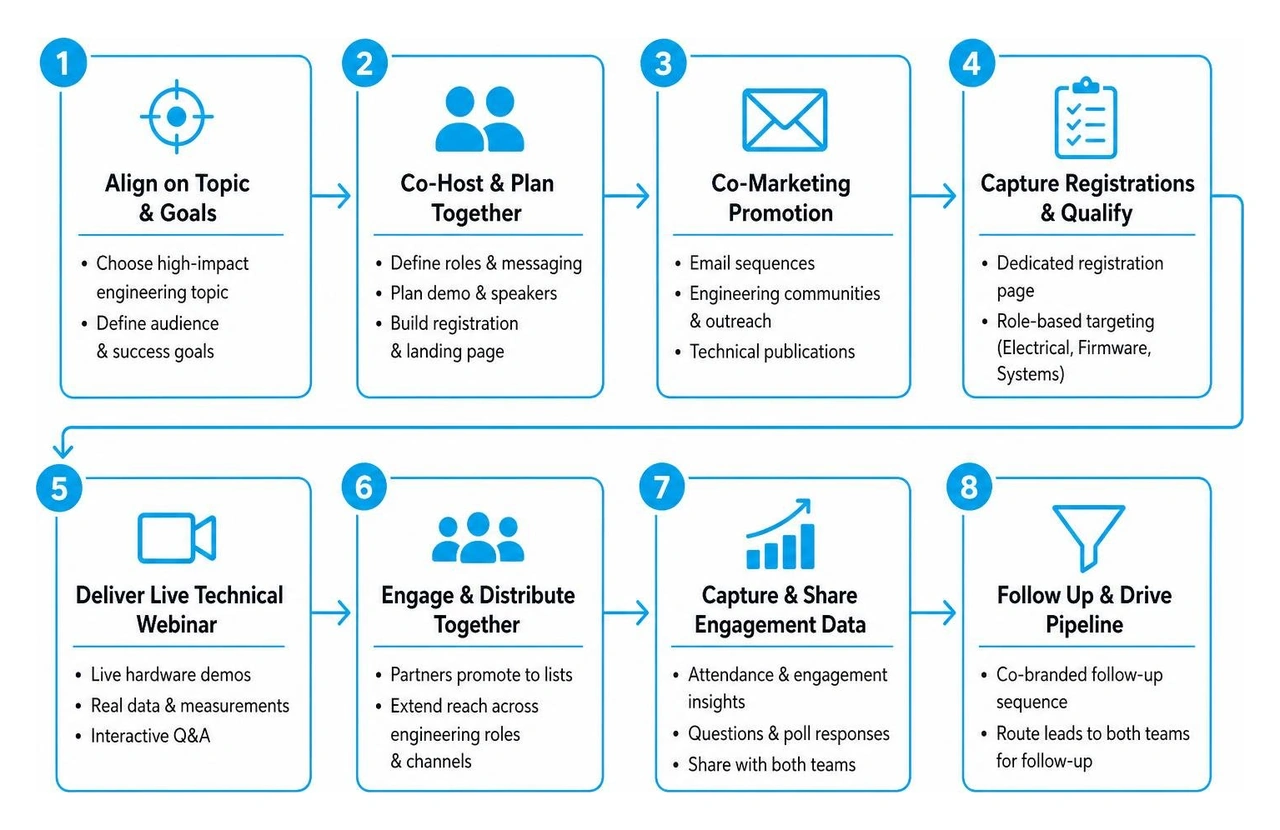
Structure your pre-event promotion to build anticipation. Using a dedicated series of pre-launch messages helps capture registrations across engineering communities, direct email outreach, and targeted technical publications.
Co-Hosting with Hardware and Software Partners to Reach More Buyers
You do not have to find all attendees yourself. Co-hosting with chip suppliers, distributors, or providers of compatible development tools can help you reach their customers and show how your products work together.
For example, when semiconductor manufacturers team up with systems integrators for sessions like the NXP and Prodrive industrial edge computing presentation, each organization can explain its technical role and invite its own customers and prospects.
Use role-based multi-channel launch sequences (a planned series of messages across channels, tailored to each role) to address the questions electrical, firmware, and systems engineers ask.
Delivering Interactive Demos and Identifying Likely Buyers
The core of a successful hardware webinar is the live demonstration. To keep engagement high, treat the session like an interactive lab session rather than a slide presentation.
Structuring Live Demos in Hardware Webinars for Lead Generation
Here is a sample agenda for a 60-minute technical webinar:
- 0–10 Minutes: Define the core technical problem and architectural constraints.
- 10–25 Minutes: Explain the underlying hardware theory and functional blocks.
- 25–45 Minutes: Run the live benchtop demonstration, test telemetry, and edge-case stress test.
- 45–60 Minutes: Host an open technical Q&A and provide next steps for evaluation units.
Ouster also hosts hardware webinars. Ouster's LiDAR mapping summit covers practical workflows from field measurements to colorized maps using its lidar hardware.
Showing the product running in an unscripted environment can support your high-tech product launch plan.
Using Polls and Technical Q&A to Identify Buyers with Active Projects
Live polls help identify attendees who may be ready to buy. Ask about their project needs and buying plans:
- "What processor or interface architecture are you currently designing around?"
- "When do you expect to finalize your schematics and begin testing your board?"
- "What is your projected annual production volume for this design cycle?"
When an attendee says they are selecting components for a board revision within the next 90 days and plan to produce 10,000 units annually, they may be ready for a sales conversation.
After the Webinar: Rank Leads, Follow Up, and Connect Buyers with Sales
Lead generation does not conclude when the broadcast ends. The post-event phase determines whether your technical demonstration leads to sales conversations with potential customers.
Ranking Leads by What Attendees Say and Do
Rank your webinar leads based on active engagement signals rather than just job titles. Connect webinar data to your customer relationship management (CRM) system. Use marketing KPIs, or key performance indicators, to track results. Group contacts by their engagement and project needs:
- Tier 1 (Ready for Sales Follow-Up): Attended 40+ minutes live, gave poll answers indicating large planned purchase volumes, asked specific integration questions, and requested sample kits.
- Tier 2 (Longer-Term Prospects): Attended live but indicated longer design timelines (6–12 months). Send these contacts a planned series of technical emails and firmware update notes.
- Tier 3 (Passive Leads): Registered but did not attend live. Send the on-demand recording along with direct links to technical schematics and developer documentation.
Managing Evaluation Units and Moving Sales Forward
Software teams can easily distribute trial licenses, but hardware sales teams must manage physical evaluation units, developer boards, and logistics costs.
Use what attendees shared and did during the webinar to decide who should receive hardware samples:
- Confirm the buyer’s project needs and plans before shipping expensive development kits.
- Schedule a brief call with an applications engineer to review the buyer’s technical requirements before shipping hardware.
- Package development kits with quick-start guides and dedicated Slack or forum channels to help buyers set up and test the hardware.
Frequently Asked Questions About Hardware Lead Generation Webinars
What is an acceptable registration-to-attendee conversion rate for technical hardware webinars?
Send the on-demand recording promptly after the webinar.
How do we demo complex physical hardware without live broadcast failures?
Prepare backups for your broadcast setup. Use dedicated hardwired Ethernet connections, keep backup development boards powered on and ready to use, and prerecord high-resolution backup footage of your test setup. If the live data feed freezes, switch to your backup board or prerecorded baseline data while continuing your technical explanation. Clearly label any prerecorded footage or data so viewers know it is not live.
How soon should sales follow up with qualified webinar attendees?
High-intent leads who ask project-specific questions or request hardware evaluation units should receive a follow-up email from an applications engineer within 24 hours. Within 48 hours, send other attendees the replay, slide deck, and available computer-aided design (CAD) files. Use a planned series of technical follow-up emails to answer further questions.
Conclusion: Use Technical Demonstrations to Support Hardware Sales
High-value hardware buyers do not want marketing spin; they want clear proof that your board, sensor, or subsystem solves their integration challenges. By hosting focused technical webinars, showing real hardware performance, and asking attendees about their project needs and timelines, you can identify buyers for sales follow-up.
At CRISPx, we plug in as the founder's marketing and sales team so you don't need a head of marketing. Whether you are scaling an early-stage computing startup or growing an established robotics company, our dedicated subscription plans (Launch, Grow, Grow + Ads, and Scale) support your hardware marketing and sales work.
Our approach is built on proven leadership and results:
Tony Crisp has 30 years in branding, 100+ hardware launches and 8+ patents. Robosen Optimus Prime went from Kickstarter to CES, then Hasbro and Disney licenses. FuzeDrive ran a top 1% Indiegogo campaign. SecureCircle was acquired by CrowdStrike.
We apply The DOSE Method™ strategy framework to clarify who your product is for and why they should choose it, and to fix what is holding back your growth:
- Diagnosis: Find what's broken in your product message and marketing work.
- Prescription: Fix the biggest problem first to help buyers take the next step.
- Prognosis: Set clear performance targets, track progress, and continuously adjust.
Use these emotional drivers to connect product benefits to what buyers care about: Dopamine (they want it), Oxytocin (they trust it), Serotonin (they're proud of it), and Endorphins (they feel relief).
Ready to see how your hardware messaging and website perform? request a free DOSEscore™ brand checkup to review your website and story, or book a strategy call with our team today.
Get a free brand checkup.
We work like a brand doctor. The DOSE Method™ finds what's broken, fixes the biggest problem first, then tracks the results.
