The Only Marketing KPI List You Will Ever Need
Discover essential kpi's for marketing: Track top-of-funnel awareness, conversions, ROI & more with LaunchX, OrbitX strategies. Boost performance now!


Discover essential kpi's for marketing: Track top-of-funnel awareness, conversions, ROI & more with LaunchX, OrbitX strategies. Boost performance now!
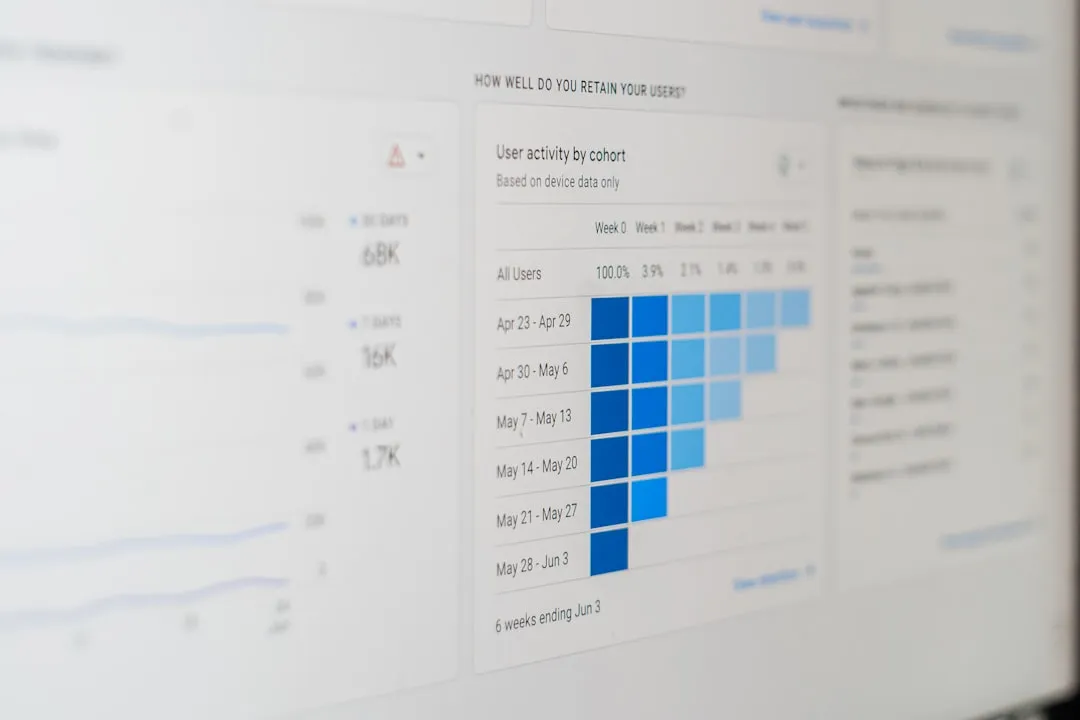
KPI's for marketing are measurable indicators that show how your marketing efforts impact business goals like revenue, pipeline growth, and customer retention. Here are the essential marketing KPIs every tech startup should track:
| Category | Key KPIs | Purpose |
|---|---|---|
| Acquisition | CAC, CPL, ROAS | Measure cost efficiency of gaining new customers |
| Conversion | Conversion Rate, MQL, SQL | Track how prospects move through your funnel |
| Revenue | Marketing ROI, CLV, Pipeline Contribution | Prove marketing's financial impact |
| Engagement | CTR, Bounce Rate, Time on Page | Assess content effectiveness and audience interest |
| Retention | Churn Rate, NPS, Customer Retention Rate | Monitor customer satisfaction and loyalty |
Marketing teams today are drowning in data. Dashboards overflow with metrics, reports bloat with numbers, yet only 23 percent of marketers feel confident they're tracking what actually matters. The problem isn't lack of data—it's knowing which numbers drive strategic decisions versus which ones just look impressive in a slide deck.
The shift from activity to accountability is here. Leaders no longer accept "impressions" and "engagement" as proof of marketing value. They want to see how marketing dollars translate into pipeline, revenue, and sustainable growth. This is especially critical for tech startups navigating pre-launch challenges, where every marketing investment must justify itself against tight budgets and aggressive growth targets.
The difference between successful launches and failed ones often comes down to measurement strategy. When you track the right KPIs from day one, you build a data foundation that guides everything from channel selection to budget allocation. You move from guessing to knowing—from hoping campaigns work to proving they do.
I'm Tony Crisp, and over two decades I've helped tech startups and Fortune 500 companies define and track KPI's for marketing that prove business impact, working hands-on with brands like Nvidia, HTC Vive, and Robosen to build measurement frameworks that connect marketing activity to revenue outcomes. This guide distills that experience into a practical framework you can implement immediately.
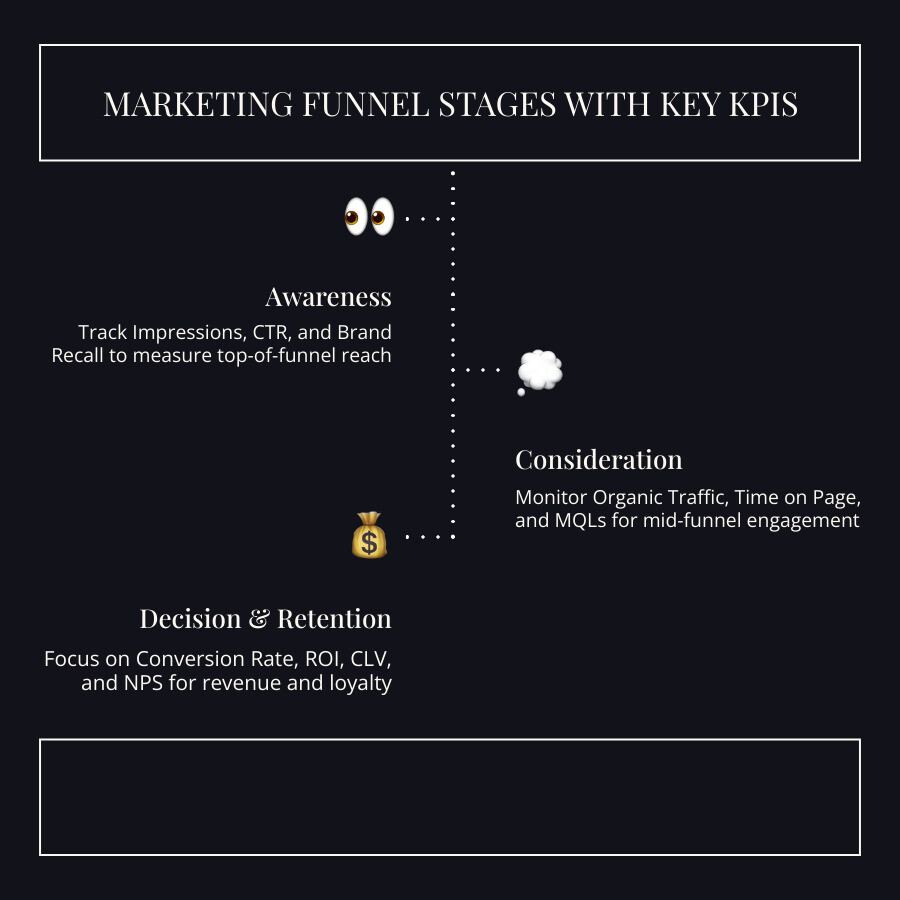
Key kpi's for marketing vocabulary:
Setting kpi's for marketing isn't just about picking numbers out of a hat. It's about strategic alignment. If your business goal is to dominate a new category, but your KPIs are focused solely on minimizing cost-per-click, you have a massive disconnect. Effective tracking marketing performance requires that every indicator derives from your overarching marketing strategy.
We often see teams fall into the "activity trap"—celebrating because they published ten blog posts this month. But did those posts drive revenue? Did they move the needle on brand perception? By focusing on KPIs that link back to business objectives, we ensure that our resource allocation is optimized for growth, not just "busy-ness."
It is crucial to understand the difference between the two: metrics and KPIs. A metric is any data point you can track—like total impressions or page views. A KPI (Key Performance Indicator) is a metric that is key to your success.
Then there are vanity metrics. These are numbers that look great on paper but don't actually influence your bottom line. For example, having 100,000 Instagram followers is a metric. If those followers never visit your site or buy your product, it’s a vanity metric. True kpi's for marketing focus on engagement quality and revenue impact. We want data that is actionable; if a number doesn't help you make a decision, it probably shouldn't be on your primary dashboard.
To run a proactive marketing department, you need a mix of leading and lagging indicators.
By monitoring leading indicators, we can make proactive adjustments to campaigns before the "lagging" results come in. For a deeper dive into these definitions, check out this Marketing Terms Cheat Sheet.
At CRISPx, our LaunchX framework is designed to build brand value from the ground up. In the early stages of a brand or product launch, your kpi's for marketing should focus on brand equity and market penetration. You aren't just looking for a quick sale; you're looking to establish a "Share of Voice" in a crowded marketplace.
We use sentiment analysis and retail marketing performance tracking to see how the market is reacting to a new brand. Is the conversation positive? Are we being mentioned alongside the industry leaders? These qualitative insights are just as important as the hard numbers during a launch phase.
The top of the funnel is all about awareness. With over 2.6 billion online buyers globally, the competition for attention is fierce. Key KPIs here include:
For companies targeting on-the-go consumers, following a tracking mobile marketing performance guide is essential to ensure your awareness efforts aren't being wasted on poorly optimized mobile experiences.
Content is the vehicle for your brand message. To measure its effectiveness, we look at:
Effective marketing campaign tracking allows us to see which specific pieces of content are acting as the gateway for new customers.
Once the brand is launched, we move into OrbitX—our growth marketing phase. Here, we leverage psychology and data-driven creativity to drive conversions. This requires more sophisticated performance marketing tracking software to monitor behavioral triggers and optimize the user journey.
| Metric | Formula | Why it Matters |
|---|---|---|
| CAC | Total Marketing Spend / New Customers | Tells you if your growth is sustainable |
| CLV | Avg. Purchase Value x Frequency x Lifespan | Shows the long-term value of your efforts |
As prospects move closer to a purchase, our kpi's for marketing become more granular.
We also pay close attention to email marketing program performance to ensure our nurture sequences are actually warming up prospects rather than annoying them.
The ultimate goal of any marketing plan is revenue.
In some cases, businesses opt for pay for performance marketing models to ensure that every marketing dollar is tied directly to a successful conversion.
The future of kpi's for marketing is inextricably linked with Artificial Intelligence. AI allows us to move from static reporting to real-time optimization. Instead of looking at what happened last month, we use tracking software for performance marketing that incorporates predictive modeling.
AI can identify patterns in customer behavior that a human might miss. For example, it might notice that users who engage with a specific video are 40% more likely to convert three weeks later. This allows us to double down on what works instantly. Furthermore, AI-driven automated reporting saves hundreds of hours, allowing our team to focus on high-level strategy and "data-driven creativity" rather than manual data entry. For those looking to master these new tools, a performance marketing certification can provide a solid foundation.
Focus is your best friend. While you might track dozens of metrics in the background, your primary dashboard should only feature 5-7 core KPIs. Any more than that creates "reporting noise," where the team loses sight of the most important goals. Choose the metrics that reflect your current strategic priority—whether that's aggressive acquisition or improving retention.
While it varies by industry, a 5:1 ratio (500% ROI) is generally considered strong. This means for every $1 spent, you generate $5 in revenue. However, for high-growth tech startups, you might intentionally accept a lower ROI in the short term to capture market share. You can view this video on ROI to understand the nuances of calculating these figures accurately.
We recommend a tiered approach:
At CRISPx, we believe that marketing is a blend of science and soul. By using our DOSE Method™, we combine data-driven strategy with high-impact creativity to ensure your brand doesn't just launch—it leads.
Tracking the right kpi's for marketing is the only way to prove that your creative efforts are driving real-world business results. Whether you are building brand value with LaunchX or scaling growth with OrbitX, your data should always tell a story of progress and accountability. Ready to move beyond vanity metrics and start driving measurable growth? Launch your brand with CRISPx today.
We work like a brand doctor. The DOSE Method™ finds what's broken, fixes the biggest problem first, then tracks the results.




Accessibility: If you are vision-impaired or have some other impairment covered by the Americans with Disabilities Act or a similar law, and you wish to discuss potential accommodations related to using this website, please contact our Accessibility Manager at (949) 791-9150