

B2B Hardware Demand Generation: Using Paid Ads and Content to Move Atoms

Learn proven hardware demand generation tactics to move atoms, not just clicks, using paid ads, content and technical buyer insights for B2B success.
Hardware Demand Generation Starts Before the Sales Call
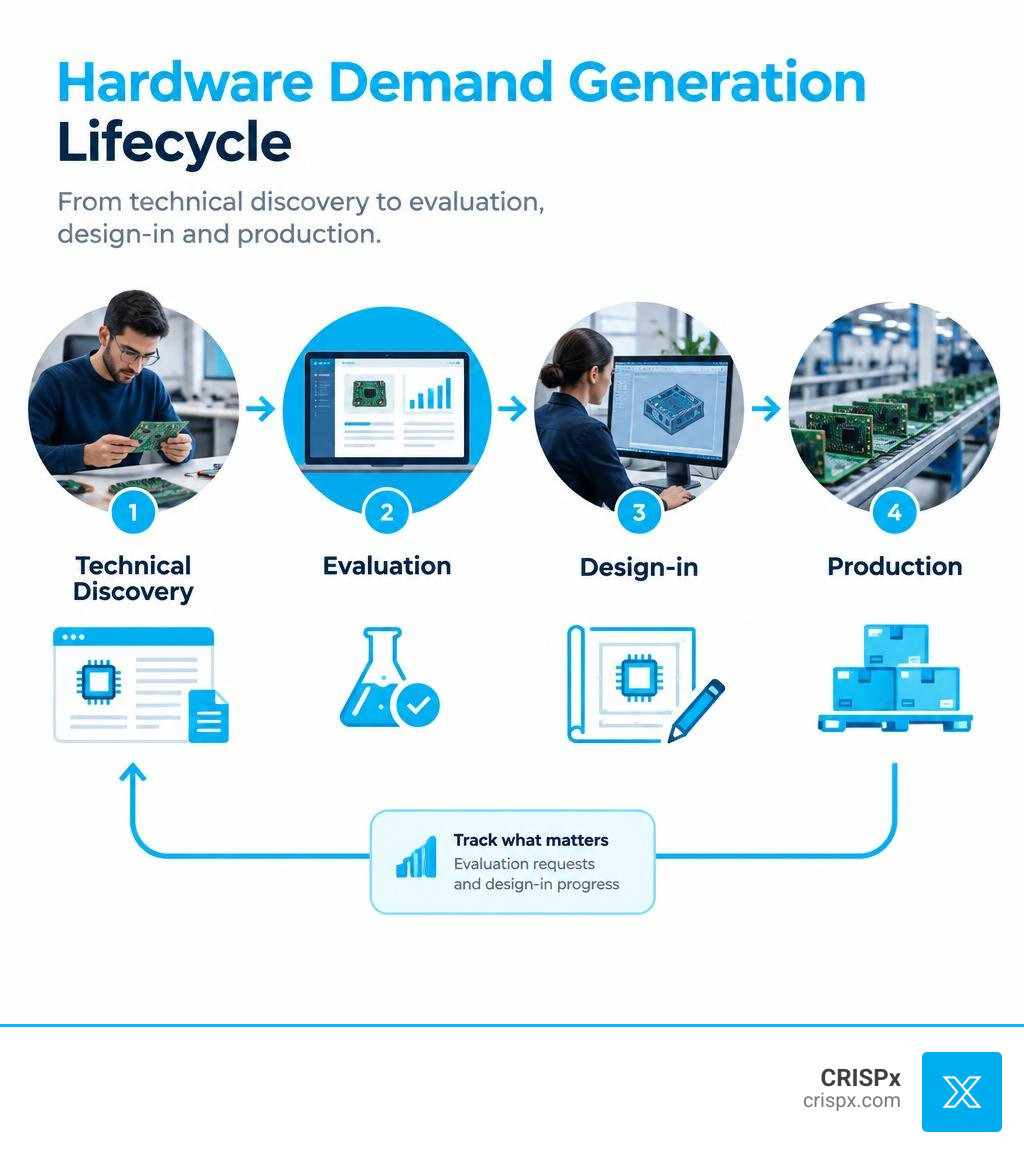
To generate demand for B2B hardware, pick the applications you can win, then make it easy for engineers to test your claims. Publish useful application notes, selection guides, and reference designs without a form. Use focused ads, specialist communities, and partners to bring the right engineers to that proof. Track evaluation requests and design-in progress, not just clicks.
A hardware lead is not an order. Engineers may research parts without contacting you, while tooling, lead times, and inventory put real limits on what you can deliver. Your content and paid ads should help a buyer take the next technical step—and help your team see whether that step happened.
I'm Tony Crisp, and I'll walk you through how to build that path.
Why Hardware Demand Generation Breaks Traditional SaaS Playbooks
Marketing physical products is nothing like marketing SaaS. When software companies run paid campaigns, their users can spin up a trial in seconds, click through a tour, and swipe a credit card. If a feature is broken, developers push an over-the-air hotfix by morning.
Hardware lives in the physical world of atoms. Moving atoms brings real constraints: tooling lead times, custom fixturing, strict minimum order quantities (MOQs), and hard Bill of Materials (BOM) unit economics. When you make a production mistake or misread your unit volumes, inventory sits on pallets in a warehouse, tying up your working capital.
Building demand for hardware requires a completely different approach. Hardware buying committees are large, averaging 11.2 stakeholders for deals over $50K. They include embedded systems engineers, electrical designers, firmware developers, procurement agents, and plant managers. Forrester estimates that 70% to 80% of the B2B buying journey happens before anyone talks to a sales rep. Component selection pushes that percentage even higher because the engineering evaluation is the real work. Furthermore, Gartner reports that 67% of B2B buyers prefer a rep-free evaluation experience.
| Dimension | Software (SaaS) Demand Generation | Hardware & Component Demand Generation |
|---|---|---|
| Product Delivery | Instant cloud provisioning | Physical prototyping, sampling, and supply chain logistics |
| Commitment Friction | Low (free trials, monthly cancellation) | High (circuit redesigns, retooling, certification costs) |
| Sales Cycle | Weeks to a few months | 6 to 24+ months (discovery to mass production) |
| Primary Gatekeeper | IT buyer, departmental end-user | Hardware/embedded design engineer (has total technical veto) |
| Buying Journey | Rep-guided product demos | Anonymous deep research across datasheets and CAD models |
| Core Conversion Metric | Marketing Qualified Lead (MQL) / Trial signup | Design-in milestone, eval board activation, socket win |
The Anonymous Engineering Research Phase
When an embedded engineer evaluates a microcontroller, sensor, or power management IC, they do not want to see a sales rep. They scrutinize raw datasheets, thermal performance curves, SDK compatibility matrices, and pinout diagrams.
Industry data shows that up to 90% of identifiable account visitors remain completely anonymous throughout their research journey. Only about 3% of technical web visitors ever fill out a standard lead capture form. Hardware buyers consume an average of 8 to 13 pieces of content before reaching out to a vendor.
When engineers hit a gated PDF wall asking for their phone number just to view a basic pinout, they bounce. They move straight to a competitor whose documentation is open. To win early evaluation, you need data-driven customer insights to detect anonymous account traffic and match their research needs without forcing early form fills.
Transitioning from MQLs to the Design-In Lifecycle
Traditional marketing metrics like MQLs fail in hardware. An engineer downloading a white paper is not a sales lead. They might just be checking an interface spec at midnight.
Hardware marketers must replace the generic sales funnel with a structured design-in lifecycle. This starts with socket mapping: identifying the exact board architectures, processor sockets, and subsystems where your part provides a distinct advantage.
Executing a successful high-tech product launch means measuring your pipeline against concrete engineering milestones:
- Discovery: Anonymous verification of architectural compatibility, voltage tolerances, and interface support.
- Evaluation: Evaluation kit (eval board) ordering, reference schematic reviews, and preliminary firmware bench testing.
- Proof of Concept (PoC): Breadboard prototyping, custom board layout, and SDK integration.
- Design-In: Formal schematic lock, inclusion in the draft Bill of Materials, and pre-production sample testing.
- Design Win: Production volume purchase orders and multi-year supply agreements.
Proven B2B Hardware Demand Generation Tactics for Technical Buyers
Engineers are skeptical of typical marketing claims. They care about facts, clear specs, and verifiable test data. Effective hardware demand generation tactics focus on providing concrete proof upfront, showing exactly how your product solves system-level integration problems.
Content-Led Hardware Demand Generation Tactics for Design Engineers
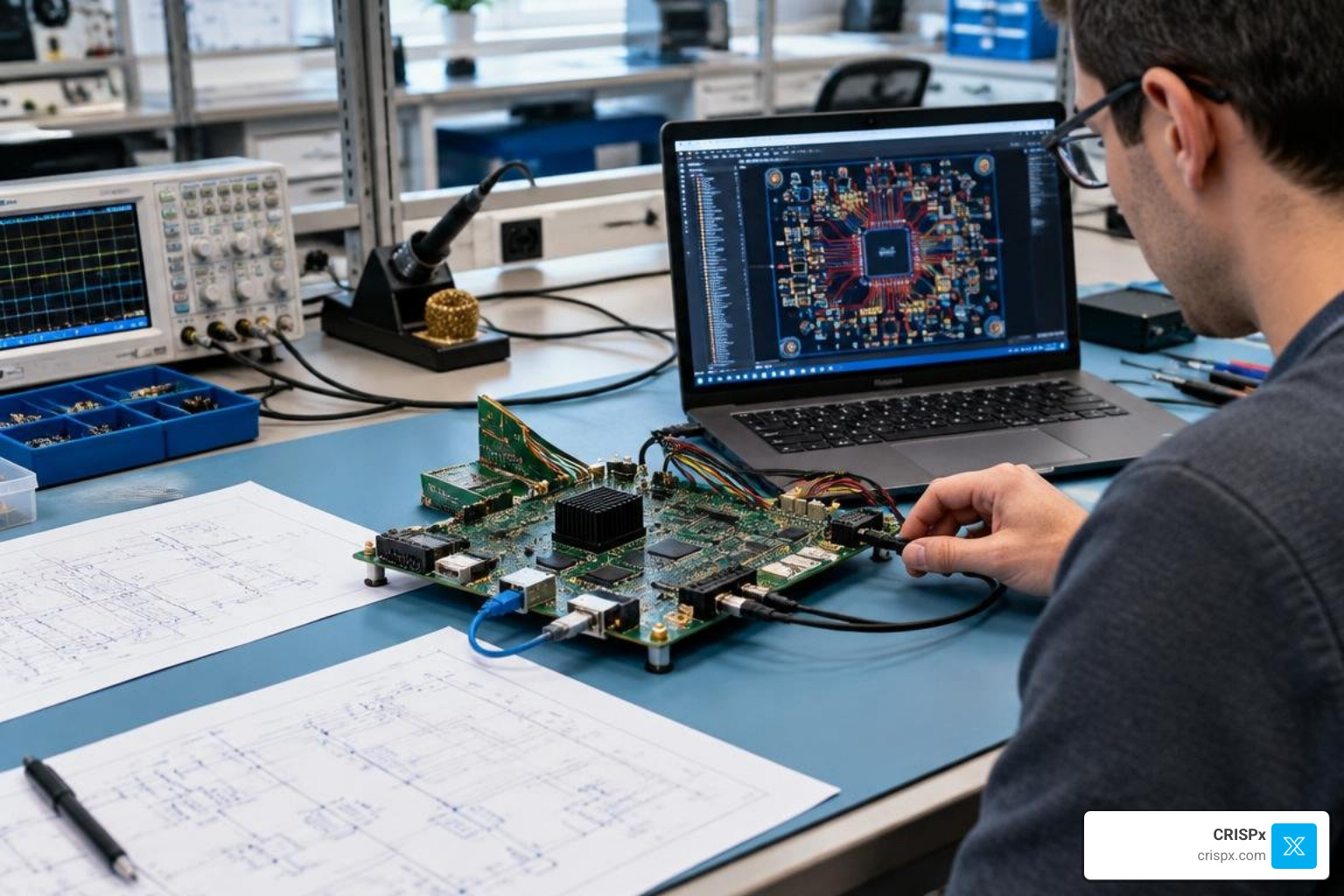
To win design-ins, your content must function as engineering tools rather than sales pitches. Use creative content marketing strategies to structure technical documentation across two distinct layers:
- The Open Knowledge Layer: Keep datasheets, pinout charts, architectural selection guides, thermal dissipation models, and API/SDK docs completely ungated. This ensures both engineers and search indexers can access your core technical data friction-free.
- The Gated Working Layer: Lightly gate hands-on working assets. These include downloadable Altium/KiCad symbol libraries, STEP 3D CAD files, SPICE simulation models, interactive power calculators, and physical evaluation boards. A simple form asking for business email and application context is an exchange engineers find fair.
Executing Paid Media and Community Hardware Demand Generation Tactics
Generic B2B ad networks often waste budget on audiences that have no technical buying authority. To reach the right teams, run focused developer campaigns on specialized platforms.
Using developer ad networks like daily.dev Ads allows you to target firmware, embedded, and hardware engineers based on their daily technical reading habits. Pair these native campaigns with performance marketing for startups across platforms like Reddit (e.g., r/ycombinator, r/embedded, r/hardware), Hackaday, and EEVblog.
When crafting technical ad copy:
- Speak with datasheet-grade honesty: State exact throughput speeds, thermal ratings, power draw, and physical dimensions. Avoid empty buzzwords like "revolutionary" or "game-changing."
- Promote the next technical step: Run In-Feed Native ads that send traffic directly to deep application notes or reference layouts rather than a generic contact page.
- Run 4-to-6 week discovery tests: Keep your early campaigns focused on a single landing page to validate audience fit before scaling your spend.
For tactical ad strategies targeting embedded developers, review our complete breakdown on reaching embedded and hardware engineers in 2026.
Channel Orchestration: Fusing Digital Campaigns with Ecosystems and Trade Shows
Hardware demand generation works best when digital intent data aligns with physical industry events and partner ecosystems.
Compressing Sales Cycles at Industry Events
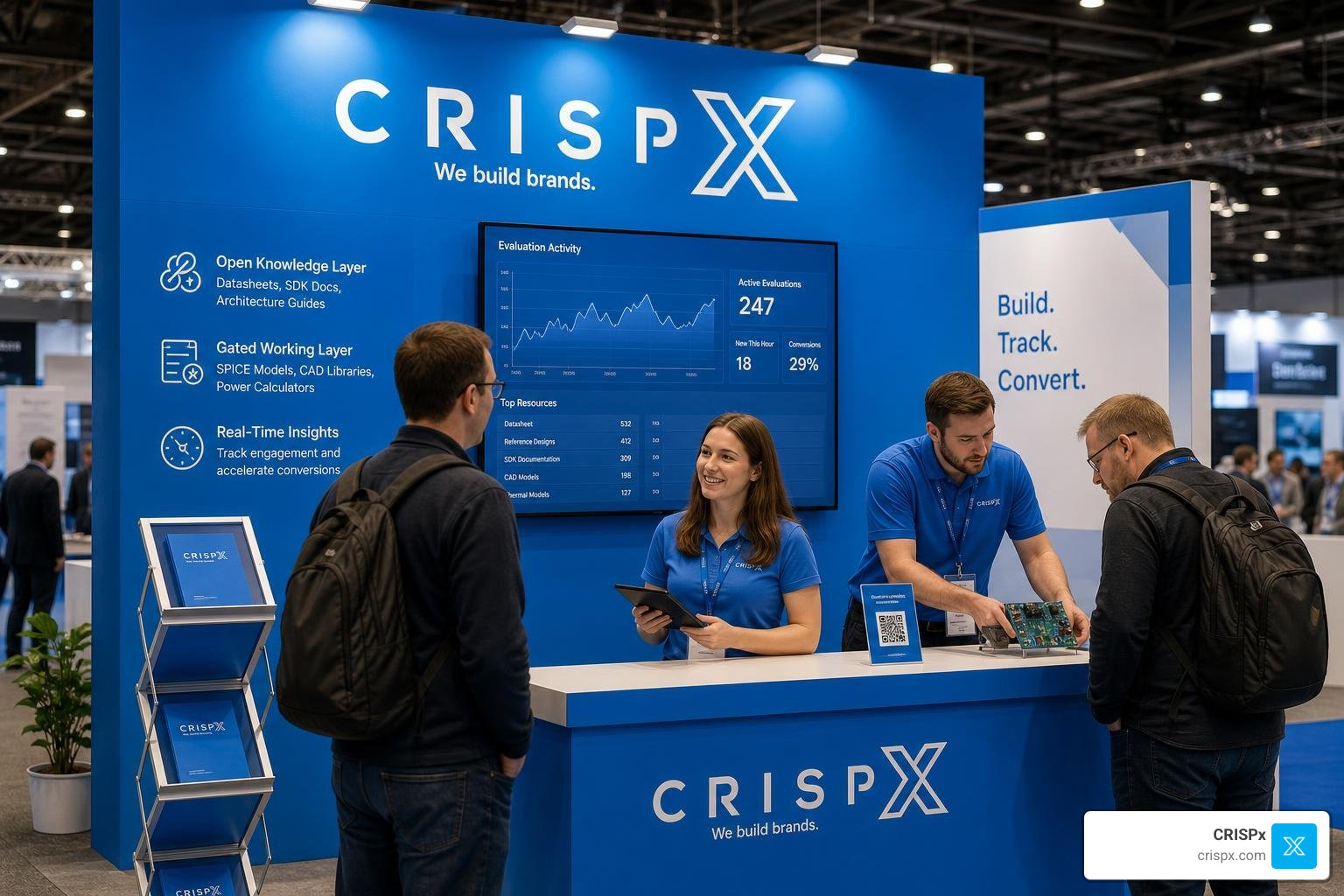
Industry events like embedded world, which brought over 36,000 visitors and 1,262 exhibitors to its 2026 event, should not be treated as discovery venues. Instead, treat them as compression points for deals already in your pipeline.
To maximize event ROI and build a strong B2B brand awareness strategy:
- Pre-Target Intent Accounts: Four weeks before the trade show, run geo-fenced and account-targeted digital ads to prospects showing intent in your CRM. Invite their technical leads to private, hands-on bench demonstrations.
- Capture Technical Context: Ditch standard badge scanners that only record contact info. Have your Field Application Engineers (FAEs) record specific project details: target volume, timeline, voltage limits, and current competitor parts.
- Execute 48-Hour Technical Follow-Ups: Have an applications engineer send the relevant reference designs or evaluation boards within 48 hours of the event closing.
Combining live trade show interactions with growth marketing helps turn event foot traffic into real design evaluations.
Ecosystem Partnerships and Reference Design Pull-Through
Most hardware and semiconductor companies struggle to scale after winning their initial design-in. To build sustainable pipeline, lean into ecosystem partnerships and reference designs:
- Reference Design Pull-Through: Design complete sub-circuits or breakout boards that solve common engineering headaches. When silicon and system vendors include your reference layout in their reference designs, customer adoption follows naturally.
- EDA Tool Integrations: Partner with major EDA vendors to get your component models pre-loaded into their component libraries.
- Co-Marketing Distribution: Partner with complementary suppliers for joint webinars and technical teardowns. For example, trade publisher webinars routinely generate over 1,000 qualified registrations for specialized technical topics.
Optimizing for AI-Assisted Hardware Discovery (AEO)
How engineers find components has fundamentally changed. Today, 94% of B2B buyers use generative AI tools like ChatGPT, Claude, Google Gemini, and Perplexity during their product evaluation process.
Engineers frequently use AI engines to run queries like:
"Compare the quiescent current and thermal dissipation between [Component A] and [Component B] for an ultra-low-power IoT device."
If your critical technical specs are locked behind complex gated PDFs, AI crawlers will miss them entirely. You lose the evaluation before it even begins.
To make sure your hardware is cited in AI search summaries:
- Adopt Answer-First Architecture: Format all technical pages with direct, concise summary answers at the top, followed by structured HTML specification tables.
- Implement Schema Markup: Use structured JSON-LD markup for technical specs, operating ranges, pin counts, and package types.
- Engage Specialist Communities: Reddit and technical forums are among the most heavily cited sources across generative AI models. Answering technical questions in public forums directly impacts your presence in AI-generated answers.
Learn how to integrate AI in digital marketing to ensure your technical documentation stays visible across all search interfaces.
Measurement, Sales Timing, and Avoiding Critical Hardware GTM Mistakes
Measuring hardware demand generation requires moving beyond short-term metrics like cost-per-click. Manufacturing cost-per-lead benchmarks typically hover between $120 and $350, with site conversion rates between 3% and 5%.
By using disciplined data analysis in marketing and thorough marketing campaign tracking, you can tie anonymous technical research directly to long-term pipeline revenue.
Pinpointing High-Intent Engineering Milestones
Involving sales reps too early can derail an evaluation. If an engineer downloads a single datasheet and gets an immediate sales call, they will often disengage.
Instead, watch for high-intent technical milestones before passing accounts to your Field Application Engineering or sales teams:
- Repeat Reference Design Downloads: Multiple engineers from the same target company domain downloading identical Altium files within 14 days.
- SDK and Sandbox Activity: Sustained visits to developer documentation, active API key generation, or GitHub repository clones.
- Evaluation Kit Activation: Follow-up searches for debugging guides or errata sheets after an eval board delivery.
Using advanced marketing analytics helps you spot when an account shifts from passive research to an active product design cycle.
Avoiding GTM Traps: Broad Targeting and Premature Gating
Hardware startups often run into three common go-to-market pitfalls:
- Targeting Too Broadly: Trying to sell a general-purpose processor to "all IoT companies" dilutes your budget. Focus on a tight beachhead market of 50 to 100 named accounts within a specific application area (such as motor control for robotic actuators).
- Premature Content Gating: Gating foundational technical specs cuts off your organic search traffic and makes you invisible to AI tools. Keep your specs open and gate only high-value working assets.
- Ignoring Channel and Unit Economics: Pricing errors can severely hurt hardware startups. If you sell through distributors or retail partners, factor their margins (typically 40% to 60%) into your pricing model from day one. You should also budget a 1% to 5% warranty reserve for reverse logistics and support before scaling production.
Frequently Asked Questions About Hardware Demand Generation Tactics
How long does it take for hardware demand generation to show qualified pipeline?
Leading indicators—such as target account web traffic, open documentation depth, and eval board requests—typically appear within the first quarter. Attributable design-in pipeline generally emerges within two to three quarters. Full revenue realization aligns with your customers' mass-production schedules, which can range from 12 to 24 months.
What content should hardware companies keep open versus gated?
Keep your foundational knowledge layer entirely open: datasheets, pinouts, application notes, thermal benchmarks, and SDK guides. This fuels your organic search rankings and AI citations. Gate only your working tools: downloadable CAD/EDA footprints, SPICE simulation files, and physical evaluation boards, using progressive profiling with minimal forms.
How can hardware marketers avoid channel conflict with distributors?
Focus your demand generation engine on driving the initial design-in decision with the engineering team. Once the customer locks your part into their Bill of Materials, route the physical component fulfillment through your distribution partners. Distributors welcome demand creation that brings pre-registered design wins to their channel.
Solving the Three Big Hardware Marketing Problems
Most hardware companies struggle with three core challenges:
- The Launch Falls Flat: The engineering team built an incredible product, but the messaging fails to clearly communicate its value to the market.
- Growth Stalls: Sales spike right after a launch or funding round, but flatten out once early buzz fades.
- People Don't Get It: The website reads like an internal spec sheet, listing clock speeds and protocols without explaining how it solves the customer's operational problem.
At CRISPx, we fix these issues by using The DOSE Method™ as our strategic framework:
- Diagnosis: Find what is broken across your current positioning, technical content, and conversion paths.
- Prescription: Fix the biggest bottleneck first, whether that means rewriting your positioning or restructuring gated assets.
- Prognosis: Set clear engineering milestones, track real intent signals, and refine the campaign over time.
We help build the emotional and rational connection your buyers need: Dopamine (they want it), Oxytocin (they trust it), Serotonin (they take pride in choosing it), and Endorphins (they feel relief that it solves their integration headache).
Build Demand That Actually Moves Physical Units
CRISPx plugs in directly as your outsourced marketing and sales team, so you get full commercial execution without needing to hire a head of marketing. We work with engineer founders across consumer electronics, robotics, space and defense, and computers and components.
Our track record speaks for itself:
- Tony Crisp has 30 years in branding, 100+ hardware launches and 8+ patents, and co-founded AViiQ (acquired);
- Robosen Optimus Prime went from Kickstarter to CES, then Hasbro and Disney licenses;
- XFX became NVIDIA's #1 graphics card partner worldwide and went public;
- FuzeDrive ran a top 1% Indiegogo campaign;
- SecureCircle was acquired by CrowdStrike;
- Element U.S. Space & Defense serves clients like Anduril, SpaceX and NASA.
Whether you are preparing for launch or scaling an existing product line, we offer four flexible subscription plans: Launch, Grow, Grow + Ads, and Scale.
Ready to see how your site and positioning hold up? Get a free DOSEscore™ brand checkup to audit your website and messaging, or book a strategy call with our team today. Explore our hardware launch services and learn how The DOSE Method™ framework can turn your physical engineering into a dependable demand engine.
Get a free brand checkup.
We work like a brand doctor. The DOSE Method™ finds what's broken, fixes the biggest problem first, then tracks the results.