

Why Sales Fade After Launch: How Hardware Brands Keep Demand Going

Learn how a customer engagement and social media strategy keeps hardware buyers engaged after launch, answers questions, and gathers useful product feedback.
Your customer engagement and social media strategy should keep working after launch day. You do not need big ad campaigns to keep buyers interested. Show how the product works in real life, answer buyer questions publicly, and use feedback to make better products. Post build clips, customer setups, and software update logs. Answer direct messages and post comments promptly. Track helpful answers, reply speed, saved posts, site visits, and orders from your channels.
You do not need a brand-new product release to post good content. A clear answer to a common setup question helps the next buyer choose your product too.
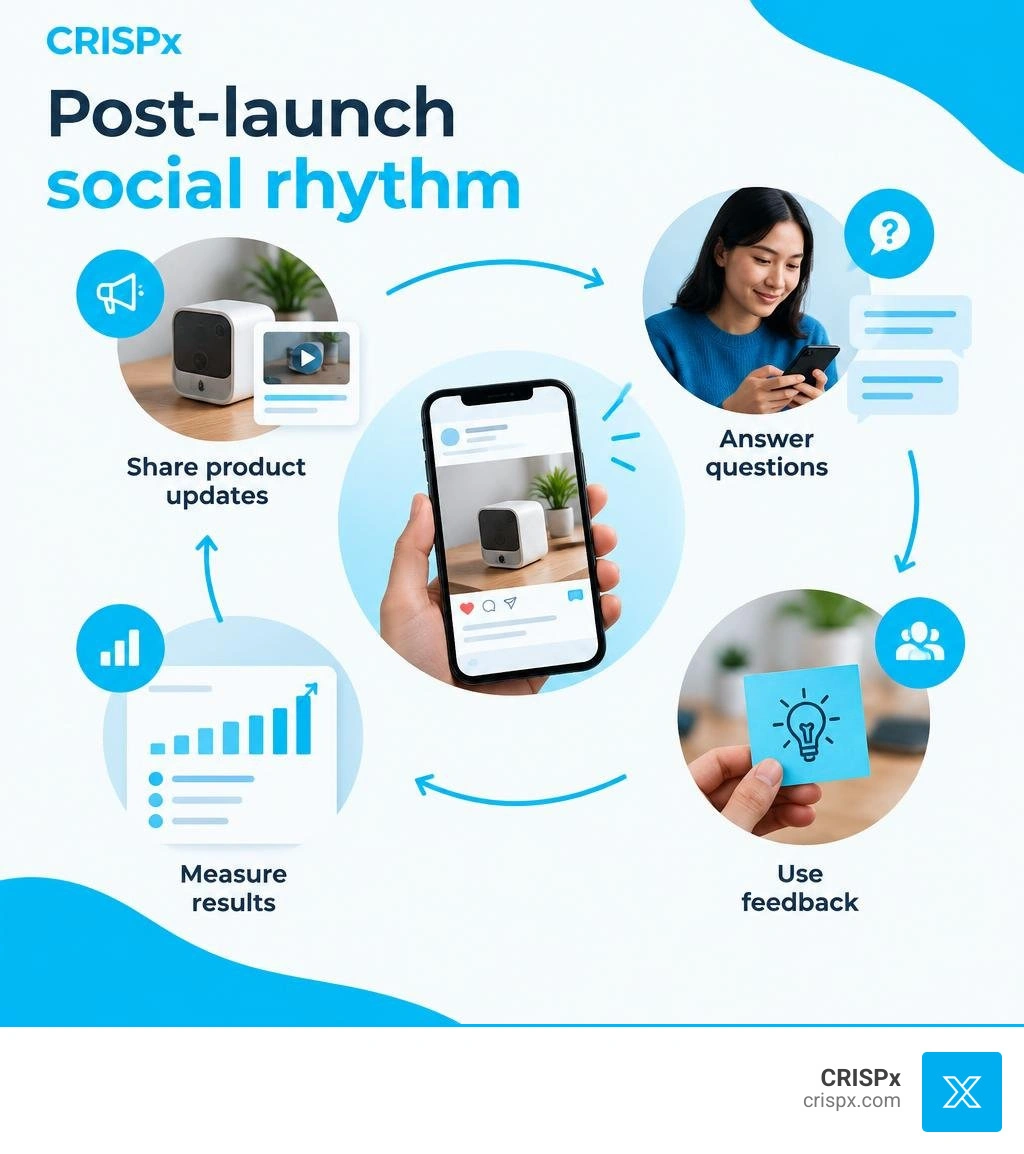
Why Hardware Social Media Goes Quiet After Launch
Many hardware startups run into a common roadblock: growth stalls.
Before launch, excitement runs high. You post teaser clips, campaign updates, and news mentions. Once the initial batch ships out, feeds often go silent. The engineering team returns to the lab to fix software bugs, manage part suppliers, and pack boxes. Marketing pauses because no one has time to film polished ads.
When posting stops, fewer new buyers see your pages. Early backers also feel forgotten if you only post when you want them to buy something new.
In hardware—whether consumer electronics, robotics, computers, or space and defense parts—buyers take time to check reliability. Consistent posting proves your business is active, healthy, and ready to help users. Keeping buyer interest alive requires steady B2B brand building and regular public updates instead of rare, pushy sales pitches.
Core Customer Engagement and Social Media Strategy for Hardware

A practical social media plan for hardware does not chase viral dances or memes. Instead, it documents daily engineering work, proves what the device can do, and answers user questions.
By using creative content marketing strategies, your team can turn everyday lab work into helpful posts.
Building an Authentic Customer Engagement and Social Media Strategy
You do not need an expensive film crew to create useful posts. Simple formats work best for technical buyers:
- Teardowns and Build Videos: Show internal parts. Explain why you picked a certain circuit chip or cooling fan. For example, in a hypothetical robotics startup, an engineer can show how a gear box limits motor play.
- Engineering Logs and Testing: Share stress tests, thermal camera shots, or drop tests. In a hypothetical sensor company example, showing a circuit board survive high voltage proves durability much better than sales copy.
- Software and Firmware Update Notes: Treat changelogs as top content. Highlight faster speeds or bug fixes with brief demo clips.
- Owner Setups and Practical Uses: Reshare real customer photos. In a hypothetical industrial hardware example, show a remote sensor running smoothly on a busy factory floor.
- Quick Q&A Clips: Have an engineer answer a top customer question right on camera.
Using clear story brand marketing ensures you explain what the product does for the buyer before listing technical specs.

Turning Early Backers into Community Advocates
Early backers are your best advocates. Keep them involved by sharing roadmap progress. Post raw workbench photos, ask for feedback on accessory ideas, and give credit to users who find rare bugs. When owners see their ideas added to product updates, they tell their friends. Foster building brand advocacy by treating early buyers as true partners.
Turning Social Comments and DMs into Support and Product Insights

Social channels often act as your front line for customer help. When an owner runs into a setup problem, they usually post a public comment or send a direct message before submitting an email ticket.
Treat social media as a real help desk.
Follow a simple four-step routine to handle messages:
- Reply Promptly: Let the user know right away that you saw their message and are looking into it.
- Sort the Requests: Separate quick setting questions from broken parts or software bugs.
- Log Issue Data: Write repeat problems and requested features directly into your engineering task list.
- Close the Loop: When a software update fixes a bug, reply back to the original post to let the user know.
This simple routine turns everyday social comments into data-driven customer insights that help remove product friction fast.
A Practical Weekly Schedule for Small Engineering Teams
You do not need a full-time social media hire to post on schedule. A small hardware team can manage social channels smoothly by dividing work into short, focused tasks throughout the week.
| Day | Focus Activity | Primary Output |
|---|---|---|
| Monday | Engineering Update / Changelog | Summary of a software fix or build milestone |
| Tuesday | Direct Monitoring & Support Help | Clear answers to technical user questions |
| Wednesday | Teardown / Bench Demo Clip | Video demonstration recorded at the test bench |
| Thursday | Ongoing Monitoring & Support Help | Public comment replies and bug log updates |
| Friday | User Spotlight / Setup Share | Reshared media highlighting a customer build |
| Ongoing | Community Response Check-in | Regular reviews of direct messages and mentions |
Executing Your Customer Engagement and Social Media Strategy
To keep this weekly routine going without extra friction:
- Record During Normal Testing: Whenever an engineer tests a board, unboxes incoming components, or validates sensors, record brief video clips on a smartphone and save them directly to a shared folder.
- Schedule Posts in Advance: Queue your weekly content ahead of time using standard publishing tools so updates publish reliably without manual intervention.
- Add Tracking Links: Use simple URL parameters across shared links. With straightforward marketing campaign tracking, you can easily see which technical posts bring new visitors to your website.
What to Measure: Meaningful Metrics Over Vanity Numbers
Follower counts and raw likes do not prove hardware sales. Technical products require numbers that show real buyer interest and customer satisfaction.
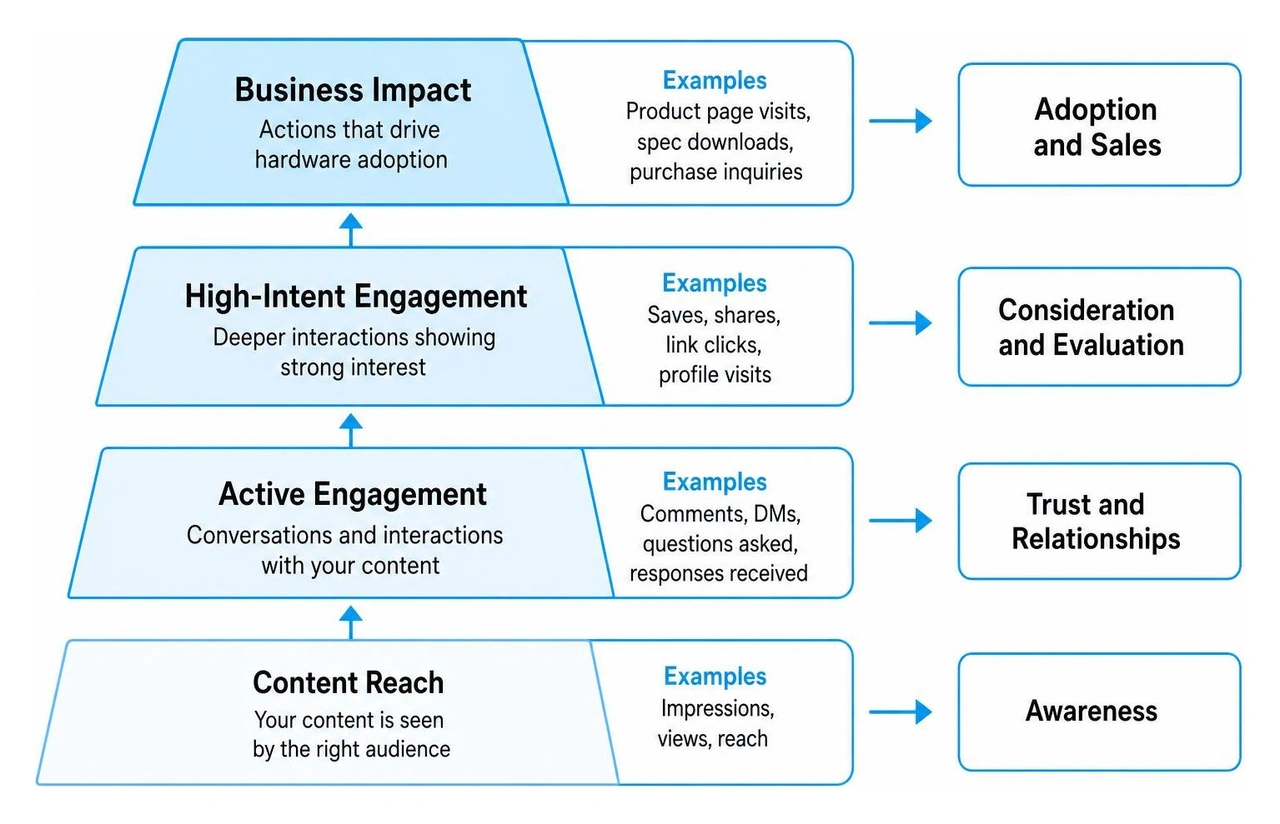
Focus on practical indicators when reviewing your KPIs for marketing:
- Response Speed: How fast your team answers technical questions in post comments and direct messages.
- Questions Solved: The total number of customer setup and troubleshooting issues solved in public view.
- Saves and Shares: Proof that wiring diagrams, pinout guides, or teardown clips gave real technical value.
- Website Visits and Sales: Real visits and hardware orders that came directly from your social posts.
Frequently Asked Questions About Post-Launch Social Media
How much time should a hardware team spend on social media each week?
A hardware team can stay active on social media by recording short clips during normal testing and planning posts ahead of time. This keeps channels useful without taking too much time away from building and shipping the product.
What should we post when we have no new product releases?
Focus on showing how your hardware works in practical environments. Share firmware update notes, component selection rationale, durability test footage, troubleshooting walkthroughs, and real customer installations. Technical buyers value ongoing support and transparent engineering documentation over continuous sales pitches.
Which platforms work best for technical consumer electronics and robotics?
Video platforms and business-focused social networks work well for technical hardware. Use video for teardowns, tutorials, and product demos that buyers can watch before they buy. Business networks can help you reach potential customers, suppliers, and partners. For consumer hardware, visual channels are useful for showing everyday use and answering common setup questions.
Conclusion
Keeping demand moving after your launch requires clear, honest communication. When you show your build process, resolve support questions publicly, and highlight real owner setups, you turn casual observers into confident buyers.
CRISPx plugs in as the founder's marketing and sales team so you do not need a head of marketing. Available plans are Launch, Grow, Grow + Ads, and Scale. We help engineering teams guide buyers through CRISPx's buyer-journey framework, D.O.S.E.: Seek, Choose, Use, and Fix.
If post-launch growth has stalled or your product pages read like spec sheets, get a free DOSEscore brand checkup of your website and story, or book a strategy call today.
Get a free brand checkup.
We work like a brand doctor. The DOSE Method™ finds what's broken, fixes the biggest problem first, then tracks the results.
