

Community Building Playbook for Creators Seeking Long-Term Backer Loyalty

Backers fund creators they trust and feel connected to. Build that community before launch with shared values, regular updates and personal outreach, then keep backers involved after the campaign.
The Psychological Drivers of Backer Engagement and Trust
Building a crowdfunding community starts with early niche engagement, a pre-launch email waitlist, and continuous transparent updates. These actions can help build day-one support. When an engineer launches a hardware product, the instinct is to lead with specifications: processing speed, sensor tolerances, and battery life. But backing an unreleased hardware project requires a leap of faith. Early supporters look beyond hardware specs. They also consider the creator's goals and the people supporting the project.
Consider the relationships backers bring, their shared interests, and what they expect the project to deliver. Homophily, the tendency of individuals to connect with others who share similar values and interests, can help build community trust. When prospective backers see peers asking technical questions, checking engineering choices, and supporting a project, they may see it as less risky.
According to empirical research on crowdfunding community identification, feeling part of a community and trusting it are positively associated with willingness to contribute and share information. When creators explain what backers can expect and make participation rewarding, supporters may care about more than the purchase.
Why Crowdfunding Community Building Drives Day-One Momentum
Early funding can help a campaign gain attention on sites like Kickstarter and Indiegogo. Plan for strong support in the opening 24 to 72 hours, but do not assume it will earn discovery-page placement, higher category rankings, or a newsletter feature.
Set a first-day funding target and estimate how much support could come from your existing audience. Applying pre-launch email sequences helps prepare prospective backers long before the campaign page goes public.
Do not rely only on people finding you through the platform or casual social media followers. Build a group of early supporters who have followed development milestones and are ready to back the product at launch. Strong first-day support may help your campaign reach people outside your existing network.
Helping Backers Feel Involved and Share Updates
A major challenge for technical founders is understanding what drives backers to tell their friends. Research on community-based resource mobilization examines how creators build community relationships and gather support. Give backers reasons to feel part of your community, not just reasons to buy.
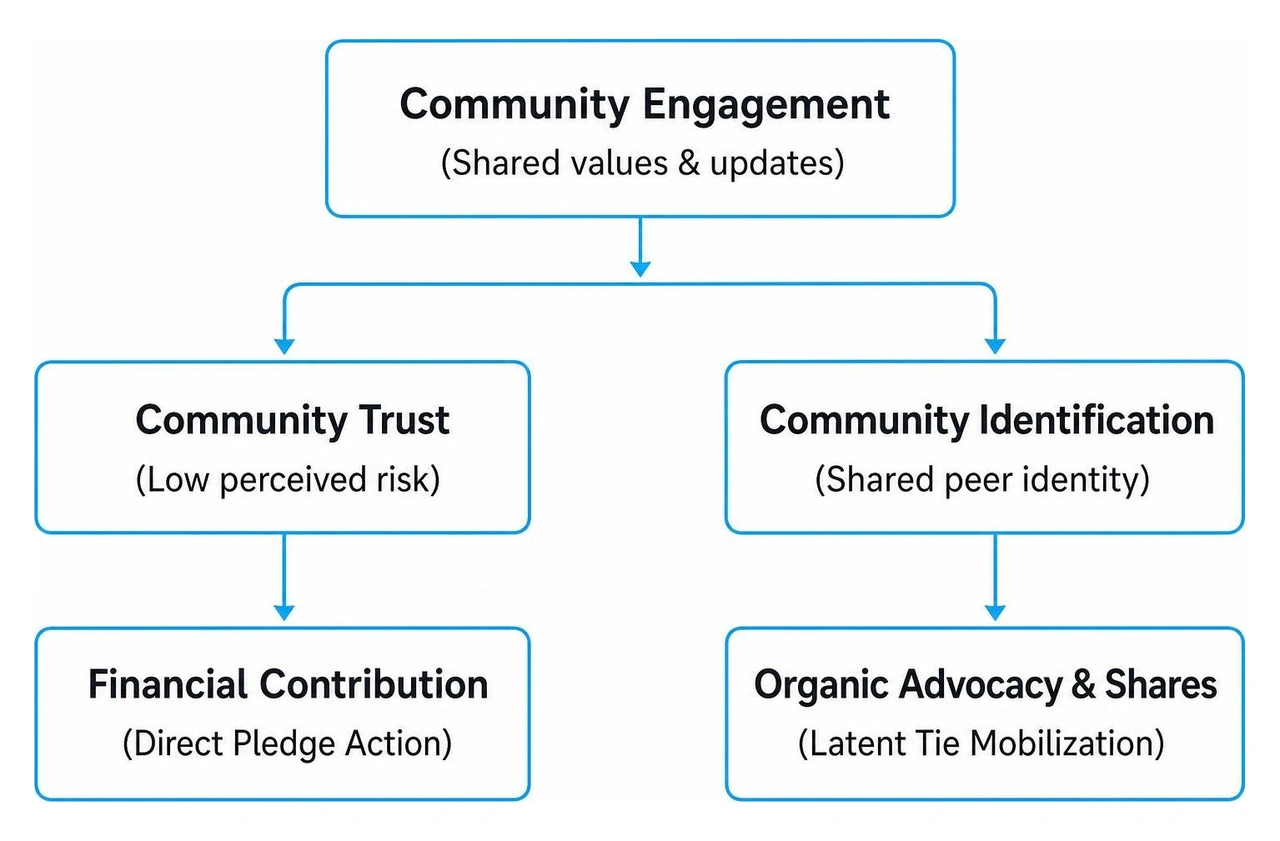
Close relationships and encouragement from other members can help quiet observers become active supporters. Private Discord servers and beta-tester forums provide places to build those connections. When backers see how their feedback shapes the product, they may feel more involved and choose to share your updates with their personal networks and industry forums.
The 9-Week Blueprint for Pre-Launch Crowdfunding Community Building
Use this 9-week blueprint to organize your pre-launch work. The goal is simple: help interested people understand the product, join your waitlist, and prepare to pledge.
| Stage / Week Window | Core Objective | Key Deliverables & Channels | Primary Backer Focus |
|---|---|---|---|
| Weeks 1–3: Discovery | Identify niche audience & gather core feedback | Niche subreddits, Discord hubs, prototype demo clips | Potential backers whose needs match the product |
| Weeks 4–6: Cultivation | Check that buyers understand the product's value & grow the email waitlist | Dedicated landing page, weekly engineering logs, micro-influencers (creators with small, specialized audiences) | Interested people deciding whether to pledge |
| Weeks 7–8: Mobilization | Secure pledge commitments & conduct dry runs | Exclusive VIP email tier, conditional pledge surveys, live Q&A | Committed Backers (ready to back on Day 1) |
| Week 9: Launch Execution | Encourage first-day pledges & sharing of campaign updates | Monday/Tuesday launch event, personalized notifications, campaign updates | Entire mobilized backer community |
Academic research on online community dynamics examines how crowdfunding and online communities can benefit each other. Treat early supporters as collaborators rather than passive consumers. Understanding how to launch a tech product means sharing engineering milestones and testing whether different groups of early backers understand your product story.
Audience Discovery, Niche Communities, and Micro-Influencer Outreach
Hardware founders often face three common hurdles: the launch falls flat because the story isn't ready, growth stalls after an initial bump, or people simply don't get the product because the website reads like an engineering spec sheet. Solving this begins by finding where your target audience naturally hangs out online.
Whether your product is a consumer electronic device, a robotics platform, or an advanced component, your core buyers congregate in specialized subreddits, Discord servers, and niche enthusiast forums. Do not enter these spaces to drop promotional links. Instead:
- Share unpolished, behind-the-scenes prototype test footage.
- Ask for direct feedback on specific hardware constraints, connector choices, or ergonomics.
- Use clear product stories to explain what the product does for the user before discussing component specifications.
Simultaneously, initiate outreach to micro-influencers in your sector. Personalize your outreach by referencing specific teardowns, reviews, or discussions they have published. Partnering with 2 to 3 respected technical creators provides third-party validation that reassures skeptical early adopters.
Converting Waitlists: Email Sequences, Launch Events, and Conditional Pledges
Social media can help people discover your product. Email gives you a way to follow up with interested backers before launch and during the campaign's opening 72 hours. Focus on subscribers who read, respond, and consider pledging, rather than comparing list size with social follower counts.
To guide subscribers toward backing your campaign on day one, follow the steps in our startup product launch guide:
- Set Up a Clear Pre-Launch Landing Page: Keep the design straightforward. Highlight the primary user problem, display a short video clip of a working prototype, and offer early-bird access in exchange for an email address.
- Send Regular Development Updates: Share weekly or bi-weekly technical notes. Discuss real engineering challenges you solved, component trade-offs, and tooling progress.
- Collect Conditional Pledges: Two weeks before launch, survey your email list directly: "If we launch on Tuesday at 8 AM PST, will you be backing in the first 2 hours?" This allows you to forecast day-one funding accurately.
- Host a Virtual Launch Party: Schedule a live video stream on a Monday or Tuesday morning. Walk through a live hardware demonstration, answer technical questions in real time, and share the live campaign link with your waitlist.
Keeping Backers Involved After the Campaign

A successful campaign is not the finish line; it is the starting point of your company's product lifecycle. Long-term brand health relies on keeping backer loyalty strong throughout the manufacturing, certification, and fulfillment cycles.
Research on crowdfunding performance examines how online communities affect platform performance. These communities change as members join, leave, and build relationships. Keep communication channels clear during supply chain or production delays so backers can follow progress and ask questions.
Helping Backers Recommend Your Product
Once your campaign concludes, help backers stay involved and recommend your product:
- Keep a Predictable Update Schedule: Post bi-weekly updates covering firmware development, tooling photos, and testing certifications. Be clear about progress and unresolved problems.
- Involve Backers in Stretch Goal Decisions: Use polls to let supporters vote on secondary features, such as carry case designs, color options, or accessory bundles.
- Encourage Recommendations: Help early backers share their experiences with your product. See our guide to encouraging customer recommendations. Give them clear updates they can share with peers who might find your retail releases useful.
Avoiding Critical Traps in Campaign Audience Strategy

Many hardware founders stumble into predictable pitfalls during pre-launch planning. Understanding how backers interact and grouping them by their needs and interest can help you plan spending and prepare for launch day.
Borst et al. (2018) studied how relationships, social media, and platform activity relate to crowdfunding performance. Their research examines moving from ‘friendfunding,’ support from close friends and family, to reaching a wider network. To reach more backers, connect with people outside your current network who share an interest in your technology.
Core Mistakes in Crowdfunding Community Building to Avoid
- Focusing on Funding Instead of People: Treating community building only as a way to collect money can push early supporters away. Help them understand the product and take part in its development.
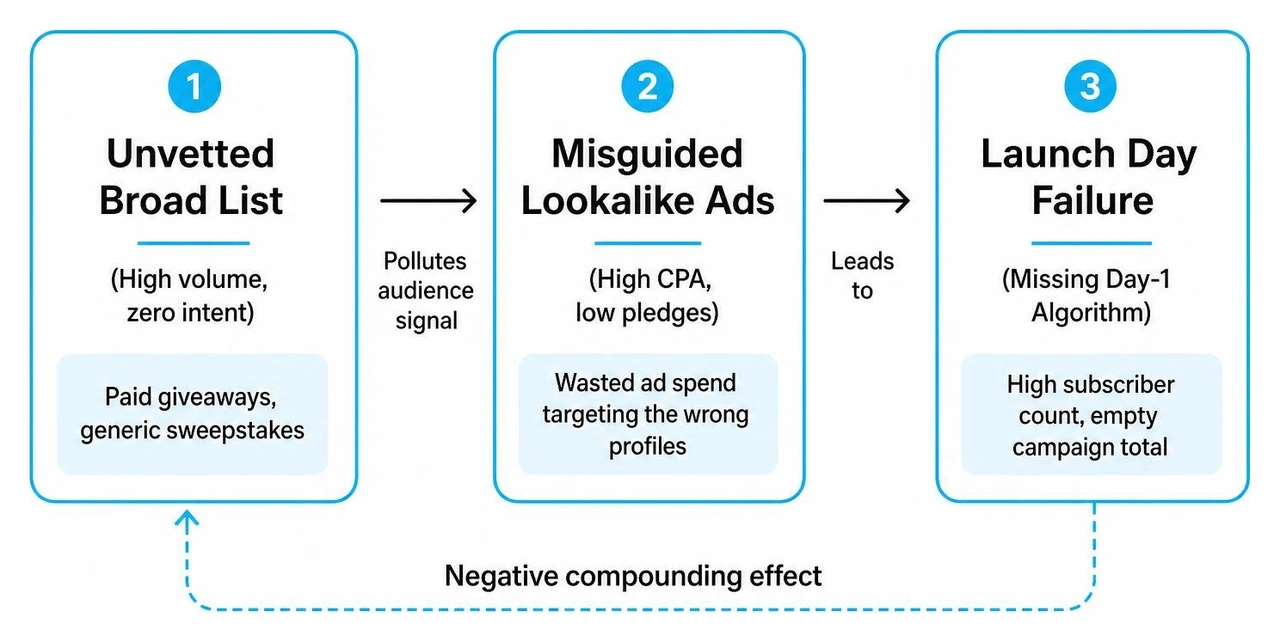
- Using Low-Interest Leads to Build Ad Audiences: Generic ads or sweepstakes can attract subscribers who have little interest in buying. Ad platforms can build lookalike audiences, groups similar to the people on your list. If that list contains low-interest subscribers, you risk paying to reach more people who are unlikely to buy.
- Relying on Inactive Social Followers: Having 20,000 followers on social media means little if only a dozen interact with your posts. Look at comments, feedback, and shares, not just follower counts.
- Ignoring Inactive Subscribers: Regularly review inactive subscribers in your pre-launch email sequence. Use responses, opens, and clicks on prototype links to assess interest and decide who needs further follow-up.
Frequently Asked Questions About Crowdfunding Communities
How early should creators begin building a community before launching?
Creators should begin community-building activities at least 9 to 12 weeks prior to launching. This window allows enough time to identify relevant online hubs, gather engineering feedback on prototypes, secure micro-influencer reviews, build a pre-launch landing page, and grow an email list of 1,000 to 3,000 engaged subscribers.
How can email help prepare backers to pledge at launch?
Email lets you contact people who have signed up for updates without relying on a social feed to show them your posts. Joining a waitlist signals interest, but it is not a pledge commitment. When the campaign goes live, a series of emails can remind interested backers to pledge and help build early support.
How do campaign creators measure non-financial community success?
Track how often people take part and what they say about the project. Useful measures include the percentages of readers who open technical updates and click their links, the amount of constructive feedback in discussion channels, posts and discussions created by users across niche forums, and how often waitlist members voluntarily share campaign links with their professional networks.
Conclusion
An engaged community can help hardware founders build support beyond launch day. Explain what your product does for buyers, give backers clear ways to offer feedback, and show how you use it. Keep your waitlist informed so interested people can decide whether to support the project.
At CRISPx, we plug in as the founder's marketing and sales team for hardware companies, so they do not need a head of marketing. Across our four plans, Launch, Grow, Grow + Ads, and Scale, we help technical teams explain what their products do for buyers and build interest in them.
Tony Crisp has 30 years in branding, 100+ hardware launches and 8+ patents. Robosen Optimus Prime went from Kickstarter to CES, then Hasbro and Disney licenses. FuzeDrive ran a top 1% Indiegogo campaign. SecureCircle was acquired by CrowdStrike.
We apply The DOSE Method™ as our strategy framework to assess and improve your marketing plan:
- Diagnosis: Find what's broken in how you explain the product, tell its story, or guide buyers from first hearing about it to placing an order.
- Prescription: Fix the biggest problem first, from unclear messaging to a pre-launch waitlist that needs work.
- Prognosis: Set clear targets, track performance, and adjust as you grow.
If you are preparing an upcoming hardware launch or working to accelerate demand for an existing product, evaluate where your story and website stand today. Get a free DOSEscore™ brand checkup to review your website and narrative, or schedule a strategy call with our team.
Reference List
Borst I, Moser C, Ferguson J. "From friendfunding to crowdfunding: Relevance of relationships, social media, and platform activities to crowdfunding performance.." New media & society, 2018. PMCID PMC6256715.
Get a free brand checkup.
We work like a brand doctor. The DOSE Method™ finds what's broken, fixes the biggest problem first, then tracks the results.
