

When Specs Look the Same: How Hardware Brands Stand Out
Branding sets hardware apart when specs look alike by making one clear advantage easy to understand and remember. Name the problem buyers face, show the benefit, and back it with test data.
When your website reads like a spec sheet, buyers get confused and move on. Branding helps create product differentiation by making a clear advantage easy to understand and remember.
Start with the buyer's real problem. Name the main benefit your hardware delivers, show proof, and display it clearly on your launch page, product page, and packaging.
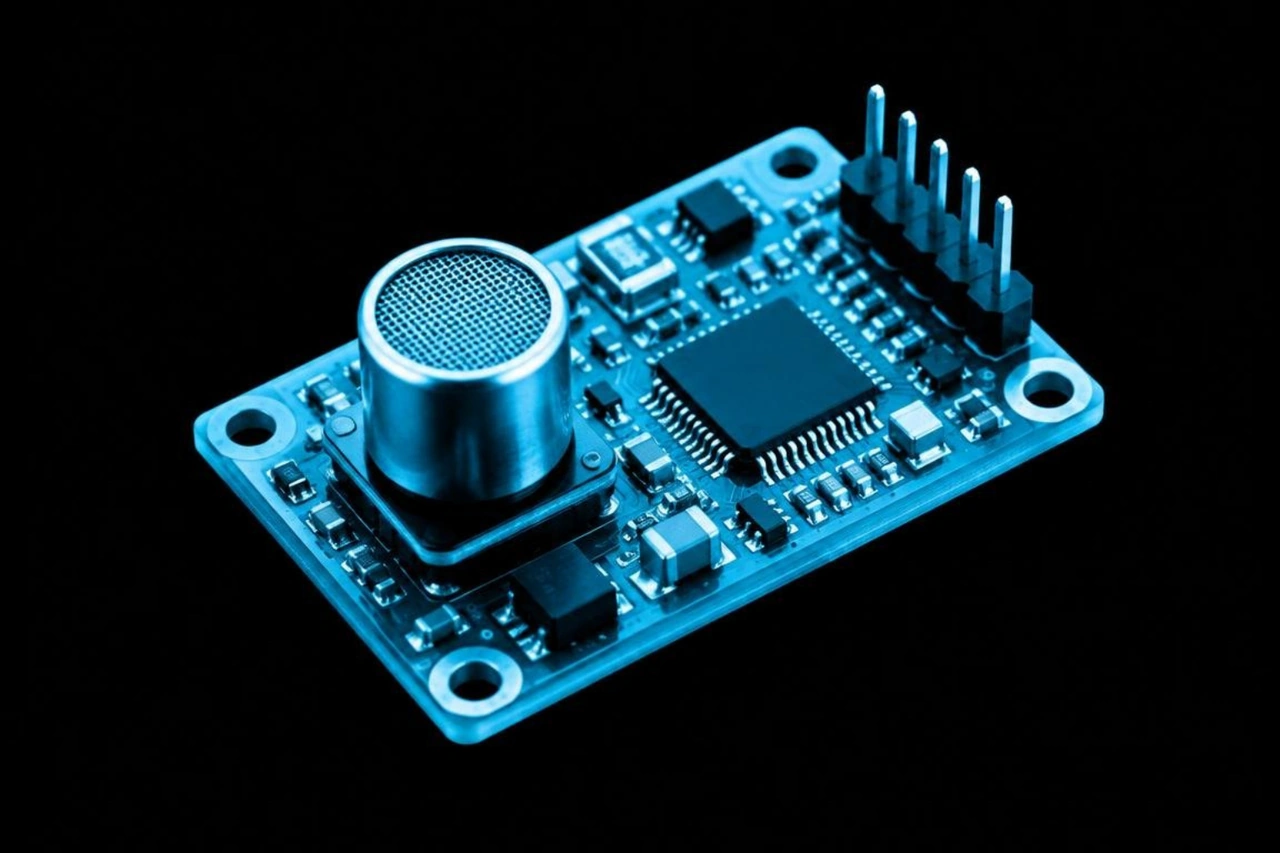
Take two hypothetical sensor boards with matching datasheets. If one company explains where its sensor works best and shows test data, buyers have a clear reason to pick it.

Why Technical Specs Alone Stop Working Once Competitors Catch Up
When you launch new hardware, your technical specs might lead the field. You might have the fastest chip, lowest heat, or most accurate sensor.
That lead rarely lasts. Competitors find similar parts, use the same suppliers, and match your benchmarks. When every product page lists identical specs, buyers cannot tell which device fits their job.
When buyers only see spec sheets, they shop on price alone. Competing on price cuts your margins and turns good engineering into an interchangeable item.
| Feature-Driven Approach | Brand-Led Approach |
|---|---|
| Lists raw speeds and pinouts | Explains what the board achieves under heavy vibration |
| Assumes buyers read every datasheet line | Leads with a clear one-sentence benefit backed by field tests |
| Forces price cuts when competitors match parts | Protects launch pricing by building buyer trust and reliability |
| Leaves buyers saying, "People don't get it" | Makes the product choice obvious within moments |
How Does Branding Help in Creating Product Differentiation for Hardware?
Hardware with processing chips, like robotics, computers, space systems, and consumer electronics, takes time to build. You cannot redesign your circuit board every time a rival enters the market.
Branding bridges this gap. It gives your hardware a clear identity, a point of view, and distinct visuals. When you apply a solid brand strategy, you highlight the engineering choices that matter most to your customer.
Buyers look for reliability, software support, clear setup guides, and a team that stands behind the build. Branding turns those strengths into recognizable assets that keep your device top of mind.
Product Differentiation vs Brand Differentiation
It helps to understand the difference between differentiating a product and differentiating a brand:
- Product differentiation is about physical features. This includes battery life, weight, materials, and sensor range.
- Brand differentiation is how buyers understand, recall, and trust your company. It is your reputation, your product documentation, and the clarity of your story.
Product differentiation changes with every hardware revision. Brand differentiation creates lasting trust that carries across entire product generations.
How Does Branding Help in Creating Product Differentiation?
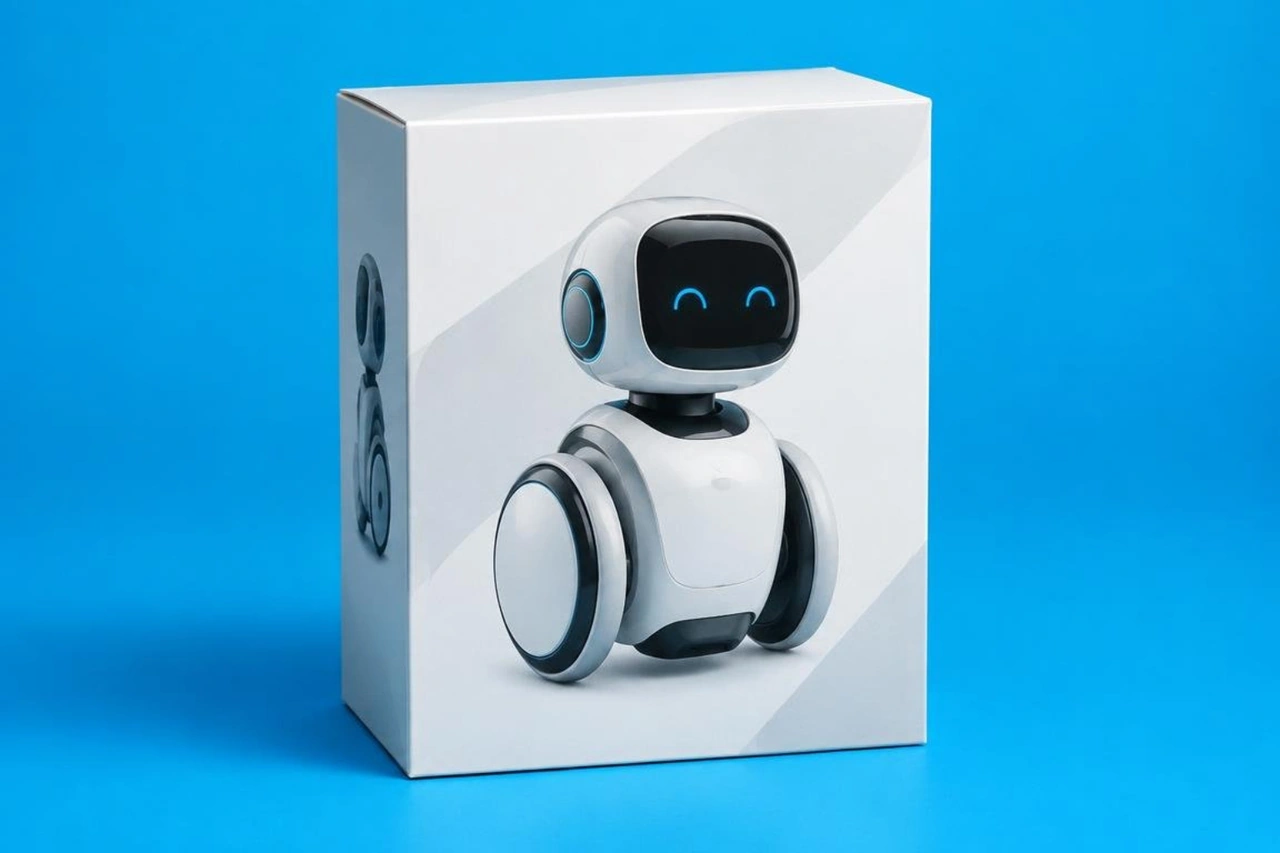
Branding shapes how buyers view your hardware before opening the box. It turns raw engineering metrics into clear reasons to buy.
When you invest in brand equity for long-term success building value that lasts, you give customers a reason to choose your hardware even when rivals match your specs.
Baseline Features vs Distinct Advantages
Every hardware category has baseline requirements. These are the table stakes to enter a market. To sell a robot vacuum, your unit must navigate a room and clean floors. In graphics cards, your board must fit standard slots and output video. Baseline features get your product onto the short list.
Your distinct advantages are the specific areas where you outperform alternatives.
| Hypothetical Hardware Category | Baseline Feature (Table Stakes) | Distinct Advantage (Brand Edge) |
|---|---|---|
| Hypothetical Robotics Platform | Obstacle avoidance, full-day runtime | Swappable toolheads and open schematics for lab customization |
| Hypothetical Sensor Board | Standard bus support, clean power inputs | Built-in heat management for direct outdoor deployment |
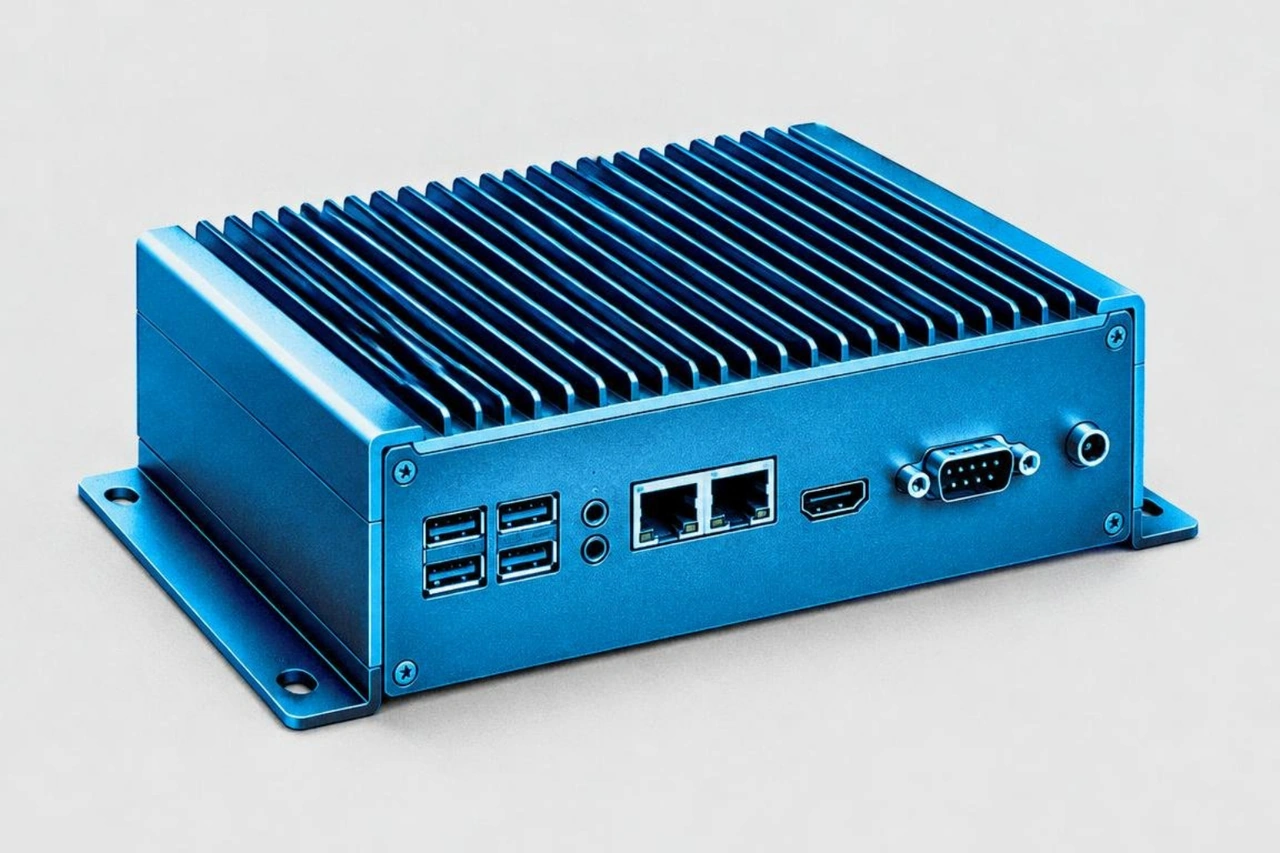
| Hypothetical Edge Computer | Standard form factor, Linux support | Fanless passive cooling that operates reliably in extreme heat |
Branding takes those key advantages and places them front and center so customers notice them right away.
How Does Branding Help in Creating Product Differentiation Beyond Features?
Buying technical equipment involves risk. An engineer choosing an embedded module for a factory risks project delays if the hardware fails. A consumer buying a home robot risks frustration if the setup fails.
Branding reduces perceived risk. Consistent documentation, clean design, clear return policies, and transparent engineering updates give buyers confidence. Taking time for developing your brand identity shows buyers you are an established company built for the long haul.
Four Steps to Build a Differentiated Hardware Brand
You do not need a complex process to set your hardware apart. Follow these four steps from our guide to building a product brand to clarify your message:
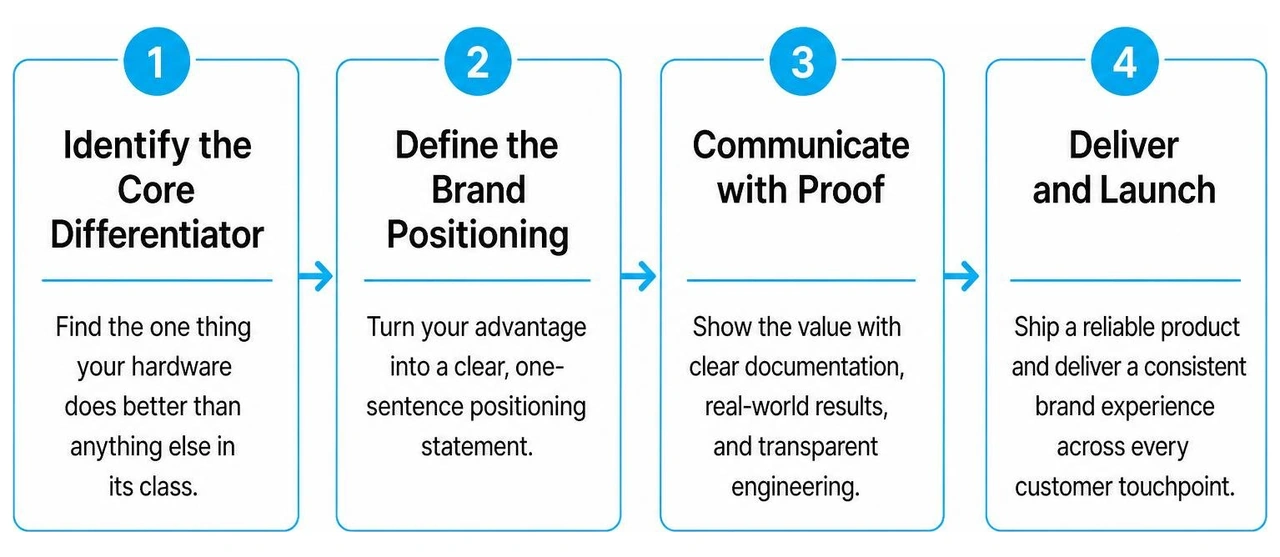
1. Identify the Core Differentiator
Review your engineering logs, user tests, and support tickets. What is the one thing your hardware does better than anything else in its class?
- Is it easier to set up out of the box?
- Does it run cooler under peak load?
- Does it provide cleaner signal output in noisy settings?
Pick one main advantage. Claiming your board is the fastest, cheapest, and most reliable all at once dilutes your message.
2. State Your Value in One Plain Sentence
Write down what your hardware does, who it serves, and why it is better, using direct language. Avoid hype.
Consider a hypothetical edge computer:
Instead of writing:
"A revolutionary computing device enabling low-latency processing."
Write:
"An edge computer that runs local object detection on low power without overheating."
Using simple story brand marketing ensures that busy engineers and buyers grasp your value right away.
3. Back Claims with Concrete Proof
Engineers and technical buyers look for solid proof. Support your value statement with clear evidence:
- Benchmark reports: Publish side-by-side power draw charts or thermal camera captures.
- Stress tests: Share drop tests, vibration runs, or battery run-down videos.
- Documentation: Provide open API docs, schematics, and clear pinout diagrams before purchase.
Proof transforms a marketing claim into an engineering fact.
4. Apply Identity Across the Launch Page, Product Pages, and Packaging
Place your one-sentence statement and proof points across every touchpoint:
- The launch page: Lead with your core advantage and proof so early backers and pre-order buyers grasp your product instantly.
- The product page: Put your main benefit and benchmark chart above the fold before the long specification table.
- Packaging and unboxing: Include quick-start cards, labeled cables, and clean industrial design that reinforce your build quality.
Consistency across these channels helps buyers remember who you are.
Signs Your Brand Differentiation Is Working
Track these four simple signs to see if your messaging connects:
- Fewer "what does it do" questions: Prospective buyers stop asking basic questions about what your device does, and instead ask specific compatibility or delivery questions.
- Stable launch pricing: You can hold your launch price without resorting to steep discounts to generate interest.
- Accurate customer reviews: Customer posts, community write-ups, and teardown videos highlight the exact advantage you built.
- Accurate mentions in AI search tools: When users ask AI search tools for recommendations in your niche, the answers cite your specific hardware strengths.
Frequently Asked Questions About Hardware Brand Differentiation
What is the fastest way to test if our hardware messaging is clear?
Show your product page to an engineer who does not work on your team. Give them a quick glance, close the tab, and ask them two questions: "What does this device do?" and "Why would you buy it over the alternative?" If they cannot answer clearly, rewrite your top headline to lead with the core benefit.
How does brand differentiation protect launch pricing?
When hardware looks identical on paper, buyers use price as their filter. When your brand makes a specific, proven benefit clear, like superior cooling or longer battery life, buyers pay for that performance rather than hunting for the cheapest alternative.
Can a technical startup differentiate without changing the hardware design?
Yes. You can differentiate through better developer documentation, clear code libraries, ready-to-use setup tools, dedicated support channels, and reliable warranties. How you package, document, and support a device is often just as valuable to buyers as raw hardware specs.
Conclusion
Clear branding turns technical hardware into an easy choice for buyers. By leading with the problem your product solves and backing it with data, you stand out in crowded markets.
At CRISPx, we plug in as the marketing and sales team for engineer founders so you do not need a head of marketing. Whether you produce consumer electronics, robotics, computers, or space and defense hardware, we support your team across our Launch, Grow, Grow + Ads, and Scale plans.
We use The DOSE Method™ to diagnose what is holding your story back, prescribe fixes for your biggest communication hurdles, and track your progress over time.
Ready to make your hardware stand out? Explore our growth services, request a free DOSEscore™ brand checkup to review your website and story, or book a strategy call with our team today.
Get a free brand checkup.
We work like a brand doctor. The DOSE Method™ finds what's broken, fixes the biggest problem first, then tracks the results.
