

A Hardware Founder's Guide to Getting Cited by ChatGPT
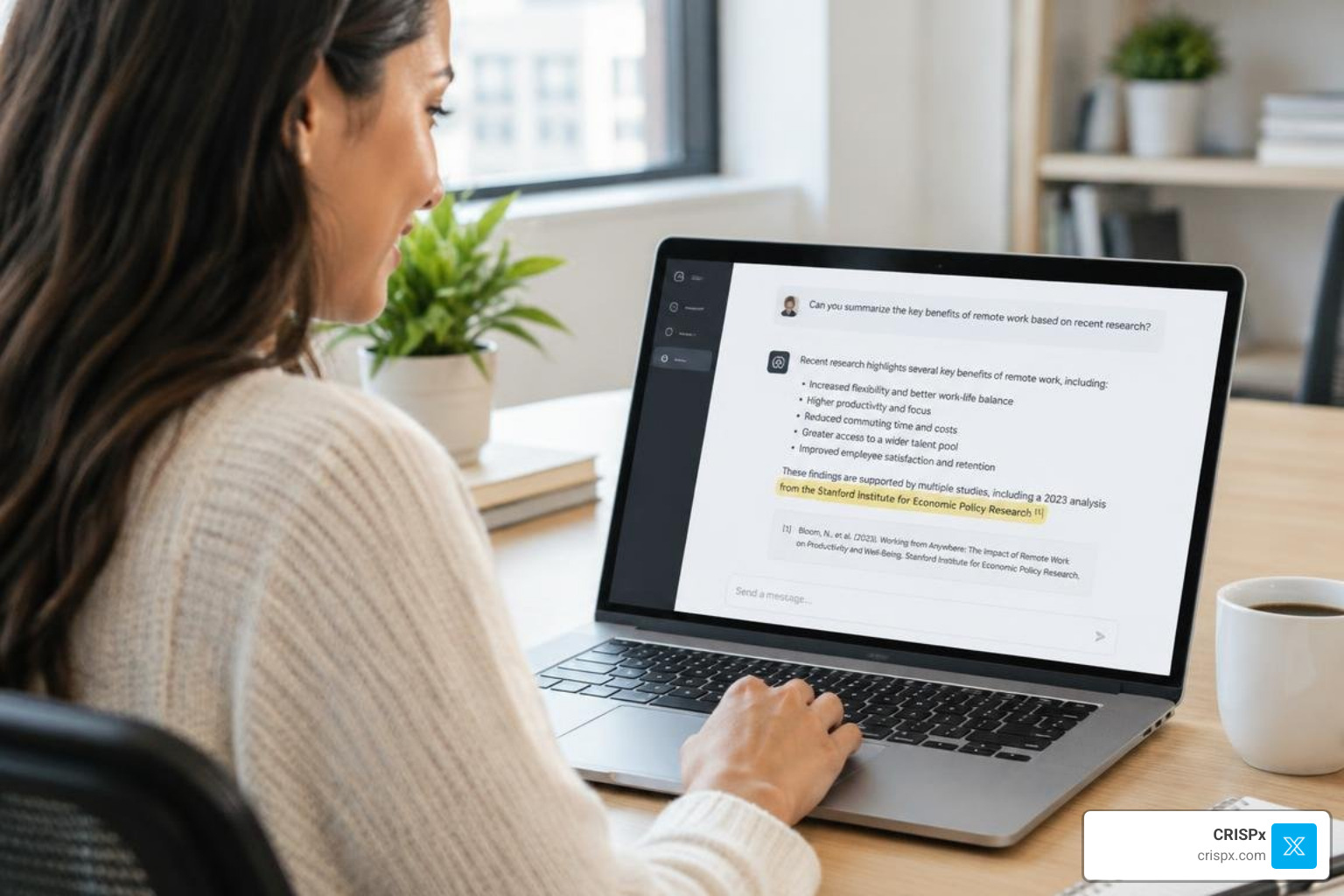
Four practical steps hardware founders can take so ChatGPT finds, trusts and cites their product pages: crawler access, answer-first headings, original data and third-party mentions.
How ChatGPT Source Retrieval Works vs Traditional Search
When sales jump at launch and then fade, help buyers find and understand your product. Lead with what it helps them do, then support that benefit with technical specifications. To help ChatGPT find and cite your pages, start with four practical steps: allow OAI-SearchBot in your robots.txt, use question-led headings with short, direct answers, publish original benchmark data, and earn mentions in third-party roundups. These steps address how AI search tools find and assess sources, which differs from traditional search.
When someone asks ChatGPT a buying or technical question with web search enabled, it can use more than information learned during training. It turns the question into related searches, often called fan-out queries, and searches a live web index, primarily Bing's index.
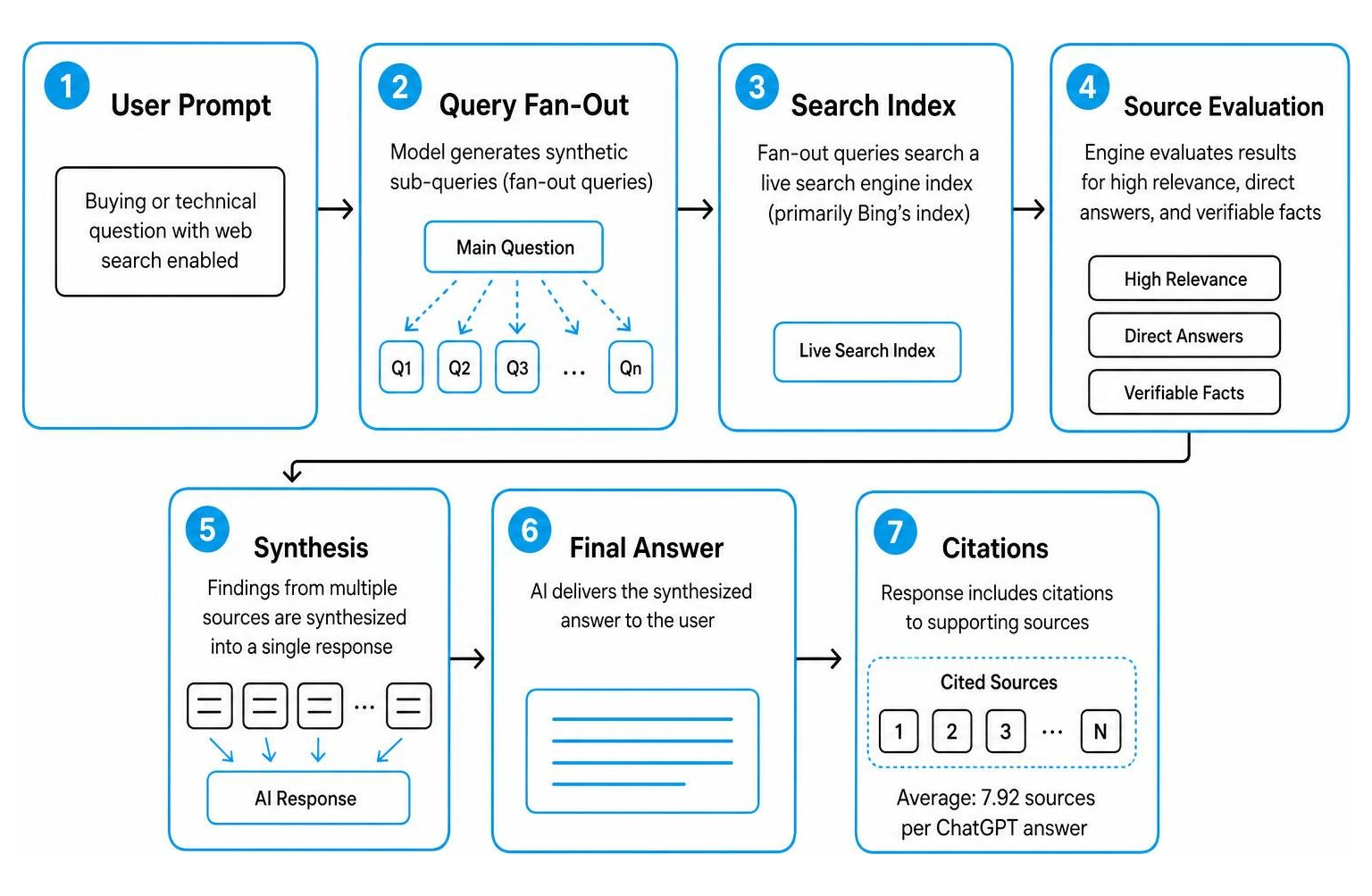
When evaluating sources, the engine looks for high relevance, direct answers, and verifiable facts. Unlike traditional search engines where a user clicks through blue links, AI answers synthesize findings from multiple sources into a single response.
| AI Engine | Primary Index Source | Common Citation Types |
|---|---|---|
| ChatGPT Search | Bing Index / OAI-SearchBot | Editorial roundups, direct vendor specs, community threads |
| Perplexity AI | Multi-Index (Bing, Google, In-house) | Academic sources, live news, technical documentation |
| Google AI Overviews | Google Search Index | Top unpaid Google search results, informational articles |
These differences matter when using AI in digital marketing. A page does not need to be in Google's top results to be cited, so clear, current content can matter alongside traditional search rankings.
Technical Crawler Requirements to Get Cited by ChatGPT
Before ChatGPT can quote your product teardown or technical guide, its web crawlers must be able to fetch your HTML. OpenAI uses distinct user agents for different tasks:
- OAI-SearchBot: Used to discover and index content for live web search and linked citations.
- ChatGPT-User: Used when a user directly asks ChatGPT to browse or fetch a specific URL in real time.
- GPTBot: Used to collect web data to train future AI models.
Some websites block AI crawlers in their robots.txt file without meaning to, including OAI-SearchBot. If you block OAI-SearchBot, your website cannot be cited in live search answers.
To help crawlers access your pages:
- Allow
OAI-SearchBotin yourrobots.txtdirectives. - Put key content in the HTML your server sends, rather than requiring JavaScript to load it in the browser.
- Submit new and updated product pages via IndexNow, a service for notifying participating search engines when pages change, to help Bing discover them.
- Avoid popups or full-page overlays that prevent automated browsers from loading and reading your content.
Following these technical guidelines helps search engines discover, parse, and quote your content in live answers.
Model Memory Mentions vs Live Search Citations
It helps to distinguish between a parametric memory mention and a live search citation.
- Parametric Memory (Brand Mention): The model recalls your brand name from its historical training dataset without searching the web. It outputs your brand as plain, unlinked text.
- Live Web Grounding (Interactive Citation): ChatGPT uses live search retrieval to find relevant web pages. It places interactive citation cards or footnotes linking directly to your URL.
Aim for clickable citations that help buyers researching a purchase reach your website.
How to Get Cited by ChatGPT with Practical Website Changes
Many engineer founders struggle when their product launch falls flat or site visitors bounce because product pages read like dry spec sheets. To get cited by chatgpt, your content must lead with what the product achieves for the buyer, structured in a way that language models can easily parse and verify.
Structure your pages so they are easy to quote:
- Open each section with an answer capsule: A concise, direct summary placed immediately beneath the heading.
- Keep the core answer clean: Leave outbound links out of the summary itself and keep it factual.
- Use clear structure: Organize the page with descriptive H2 headings, supporting images, and relevant internal and external links.
- Use natural-language URLs: Give pages clean, readable URL slugs rather than opaque or ID-based ones.
Use AI-driven content marketing techniques to make your technical insights easier for search bots to read.
Formatting Answer Capsules and Question-Led Headings
AI search tools can break a buyer's question into smaller questions and look for relevant content on indexed pages. Write your main section headings (H2) and subsection headings (H3) as direct questions your buyers ask, such as "What is the payload capacity of a direct-drive robotic arm?"
Immediately under that heading, place an answer capsule:
- A direct, 40-to-60-word summary answering the question completely.
- Follow the summary with supporting technical data, bulleted specifications, and real-world application examples.
- Lead with the user benefit, then validate it with hardware tolerances, chip architectures, or sensor benchmarks.
Publishing Original Data and Verifiable Evidence to Get Cited by ChatGPT
Language models favor primary sources that provide checkable evidence. If five websites repeat the same generic claim, the AI looks for the original testing data or benchmark report.
To position your site as a primary source:
- Publish original lab benchmarks, thermal test graphs, and battery cycle measurements.
- Include transparent comparison tables showing exact tolerances and chip specifications.
- Use Schema.org structured data, labels in your page code that describe products and organizations. Keep those labels consistent with the facts readers can see.
Keep your test methods and results clear and accurate so readers and language models can check your data.
Off-Page Authority: Why Brand Presence and Community Drive Citations
Clear website content helps search tools read your pages. Off-page authority means recognition your brand earns on other websites, such as independent reviews and community discussions. Those mentions can influence whether an AI recommends your product. The AI effect on consumer engagement explores how buyers use AI to summarize what others say before visiting a vendor site.
Getting Included in Independent Reviews and Comparison Roundups
AI answers often draw on "best of" roundups, buyer comparisons, independent review directories, and community platforms such as Reddit.
To build off-page authority:
- Identify which third-party comparison roundups already appear when you ask ChatGPT about your product category.
- Pitch product review editors to get your hardware evaluated and added to existing "best of" lists.
- Participate organically in developer and hardware communities (such as Reddit or specialized engineering forums), answering technical questions with verifiable data.
Keeping Your Business Details Consistent Across the Web
AI answers also draw on websites, profiles, and other channels that brands control or manage. Make it clear who you are and what you manufacture.
Keep your business details consistent wherever they appear publicly:
- Use an identical, one-sentence description of your business across your website, Crunchbase, LinkedIn, GitHub, and directory profiles.
- Standardize your primary website domain, business address, and leadership profiles.
- Use
OrganizationandProductschema markup, labels in your page code, to describe your business and hardware specifications for web crawlers.
How to Measure, Test, and Troubleshoot Your Citation Performance
Use a structured monitoring routine instead of checking random queries manually. Track where AI search answers mention your brand or link to your website.

Building a Measurable Prompt-Testing Workflow
To monitor your visibility over time:
- Define a fixed prompt set: Assemble 20 to 30 questions buyers ask when researching a purchase, such as "What are the most reliable industrial robotics controllers for small manufacturing lines?"
- Run tests in a neutral environment: Test the queries across ChatGPT Search with web browsing active.
- Save complete answers: Record the prompt text, model version, date, full response text, whether your brand was mentioned, and exact cited URLs.
- Test one change at a time: When you add a short answer summary or new benchmark table to a page, record the update date. Monitor whether citations appear over the following weeks.
Common Pitfalls and Citation Myths in 2026
- Myth 1: Structured data guarantees citations. Schema markup helps bots identify organizations and products, but it does not force ChatGPT to cite your page. Keep your facts in clear, visible HTML text rather than relying on markup alone.
- Myth 2:
llms.txtfiles directly boost citations. There is no evidence major search crawlers prioritizellms.txtfiles over standard HTML pages in the Bing index when finding sources to cite. - Myth 3: Academic citation rules apply to marketing. Getting your brand cited in search is different from formatting citations for academic papers. Academic guidelines, like the APA generative AI citation standards, explain how researchers cite language models, not how marketers get their websites included in answers.
Frequently Asked Questions About Getting Cited by ChatGPT
What is the difference between a brand mention and a web citation in ChatGPT?
A brand mention occurs when ChatGPT names your company as plain text in an answer, usually pulled from historical training memory. A web citation occurs during live web search when the engine retrieves your specific URL and places a clickable link card or footnote confirming the fact.
How long does it take for a newly optimized page to appear in ChatGPT citations?
Because live retrieval relies on the Bing index and OAI-SearchBot, a page has to be discovered and indexed before it can be cited. After updating on-page answer capsules and submitting URLs via IndexNow, keep testing your prompt set over the following weeks to see when citations appear.
Do high Google rankings guarantee ChatGPT citations?
No. ChatGPT relies primarily on Bing's search index and considers how closely a page answers the related searches it generates. Clear, direct answers can outperform high-ranking but unfocused pages.
Conclusion
Getting cited by ChatGPT is not about gaming an algorithm with hidden keywords. It is about removing crawler barriers, answering buyer questions directly with answer capsules, and supporting your claims with verifiable engineering data.
At CRISPx, we plug in as the founder's marketing and sales team for hardware companies, so you do not need a head of marketing. Whether you manufacture consumer electronics, robotics, space and defense systems, or computing hardware, we help explain your product's value and support it with technical evidence through our Launch, Grow, Grow + Ads, and Scale plans.
Our work is built on deep industry experience: Tony Crisp has 30 years in branding, 100+ hardware launches and 8+ patents, and co-founded AViiQ (acquired). Our track record includes helping Robosen Optimus Prime go from Kickstarter to CES, then Hasbro and Disney licenses; supporting XFX as it became NVIDIA's #1 graphics card partner worldwide and went public; driving a top 1% Indiegogo campaign for FuzeDrive; positioning SecureCircle prior to its acquisition by CrowdStrike; and supporting Element U.S. Space & Defense as it serves clients like Anduril, SpaceX and NASA.
Using The DOSE Method™ as a strategy framework, we provide a clear plan:
- Diagnosis: Find what is broken on your website and in your messaging.
- Prescription: Fix the biggest problem first, from an unclear product story to poor AI search visibility.
- Prognosis: Set concrete targets, save AI answers and track their cited links, and adjust based on the results.
Ready to see how answer engines view your hardware brand? Get a free DOSEscore™ brand checkup of your website and story, or book a strategy call with our team today.
Get a free brand checkup.
We work like a brand doctor. The DOSE Method™ finds what's broken, fixes the biggest problem first, then tracks the results.