Why Your Customers Do What They Do
Unlock human psychology in marketing secrets: master biases, scarcity, and AI insights to drive conversions and build lasting brands.


Unlock human psychology in marketing secrets: master biases, scarcity, and AI insights to drive conversions and build lasting brands.
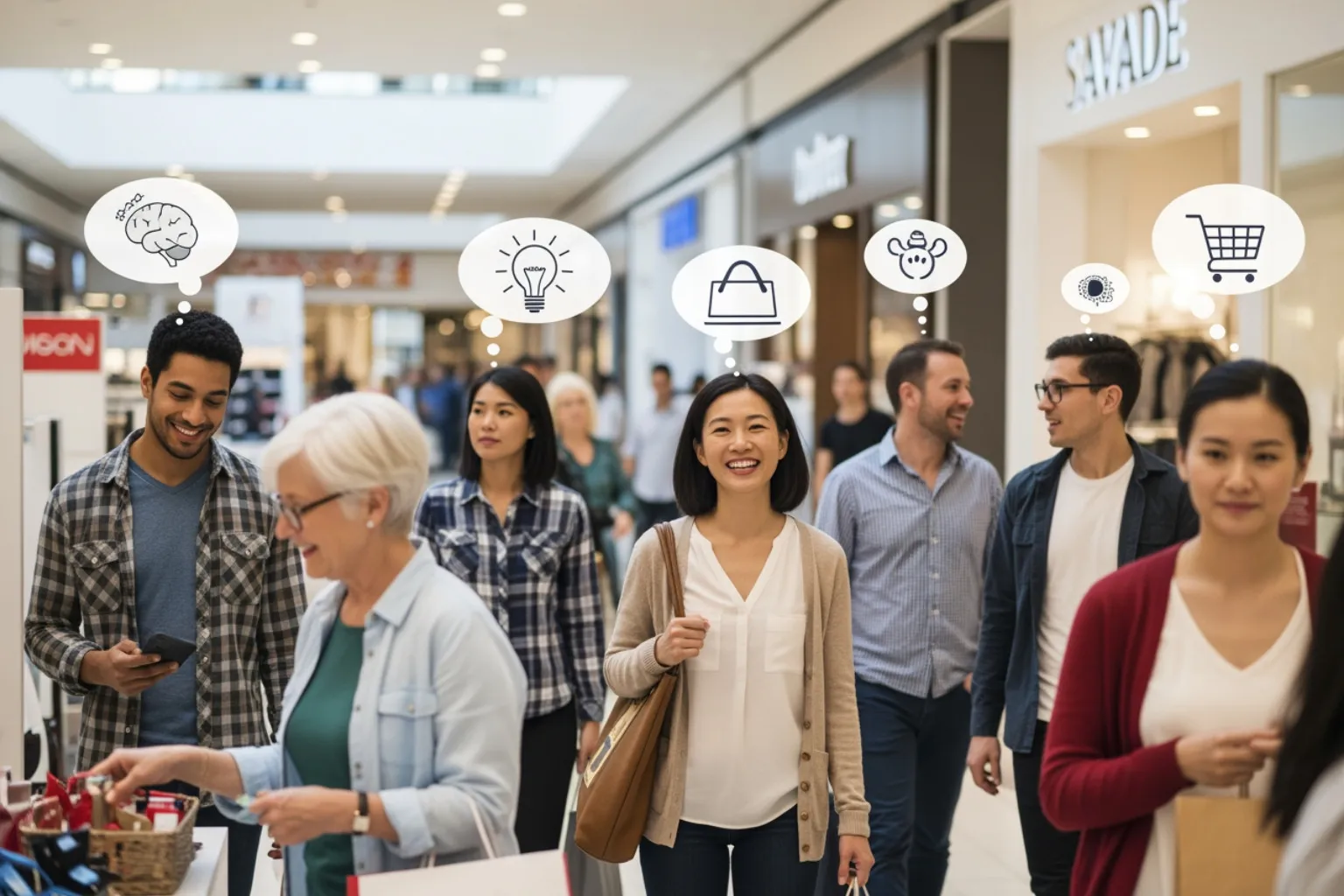

Human psychology in marketing is the science of understanding how your customers think, feel, and make decisions—so you can create messages and experiences that actually resonate. Here's what drives consumer behavior:
If you've ever wondered why customers choose one product over another—or why your marketing isn't converting despite great features—the answer lies in psychology, not just positioning.
Most tech founders I work with assume their product's superior specs will speak for themselves. They don't. Your brain processes brand stimuli before you consciously think about them. That crowded restaurant you chose? Social proof in action. That "limited time" offer you couldn't resist? Loss aversion and scarcity bias working together.
The disconnect between what customers say influences them and what actually influences them is massive. Research shows people rated neighbor behavior as the least important factor in energy conservation—yet it was the most powerful driver of actual behavior change. This gap between conscious reasoning and unconscious influence is where most marketing strategies fail.
Understanding these psychological principles isn't about manipulation—it's about meeting your customers where their brains actually make decisions. For tech startups especially, where you're often asking people to change established behaviors or adopt unfamiliar solutions, psychology-driven marketing can mean the difference between a product that gains traction and one that fizzles despite being objectively better.
I'm Tony Crisp, and over two decades working with tech brands from startups to Fortune 500 companies, I've seen how applying human psychology in marketing transforms launch success rates and customer lifetime value. At CRISPx, we've built our DOSE Method™ specifically to integrate behavioral science into every stage of brand building and growth marketing for technology products.
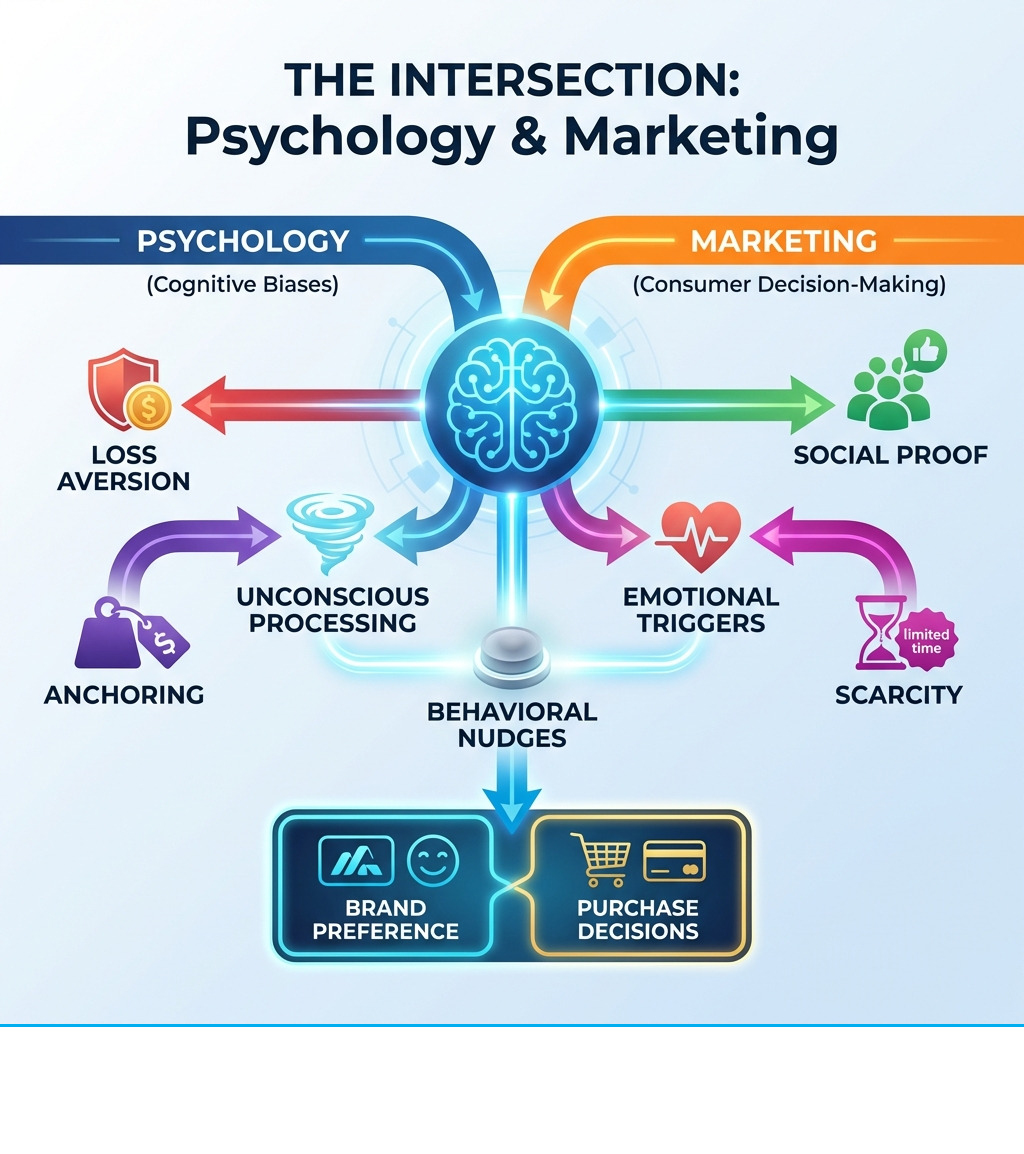
Basic human psychology in marketing vocab:
To master human psychology in marketing, we must first look at the "Big Four" principles that govern how we value things. These aren't just theories; they are evolutionary hard-wiring that kept our ancestors alive.
According to the American Marketing Association, consumer behavior is the study of how individuals make decisions regarding the products they purchase. By understanding these patterns, we can bridge the gap between a product's utility and the consumer's perception. For a deeper dive, check out our guide on behavioral science in marketing.
Cognitive biases are mental shortcuts our brains use to process information quickly. When 90% of what we see is lost by the time it reaches the brain's memory centers, these shortcuts are essential.
These biases align with the Theory of Planned Behavior, which suggests that our intentions are shaped by our attitudes, social norms, and our perceived control over the situation.
Not all psychological triggers work on everyone at the same time. To be effective, we need to map our messaging to the consumer's current state.
Maslow’s Hierarchy of NeedsMarketers often use Maslow’s hierarchy to segment their audience. Are you selling a "Safety" product (like cybersecurity) or a "Self-Actualization" product (like a high-end creative suite)? A customer worried about safety won't respond to messages about status.
The Big Five Personality TraitsPersonality influences buying habits. People high in "Openness" are early adopters of tech, while those high in "Conscientiousness" need data and precision before they commit.
Rational vs. Emotional Decision-MakingWhile we like to think we are rational, we often make emotional decisions and then use logic to justify them. For example, you buy a Tesla because of how it makes you feel (status, excitement), but you tell your friends you bought it for the "fuel savings" and "safety ratings." This is a key concept in digital marketing psychology.
When we launch a tech brand through our LaunchX framework, we focus on building immediate perceived value. This is where human psychology in marketing meets high-level strategy.
In a crowded market, being different is better than being "better." Ads in the top 10% for effectiveness achieve a distinctiveness score of 4.03, while poor performers lag at 3.6. We use Brand Signaling to communicate quality. In one scientific study, customers who thought a brand spent $20 million on ads perceived the product as 14% higher quality than those who thought the spend was only $2 million. Perceived effort equals perceived quality.
Our brains use "top-down processing," meaning we make assumptions based on prior knowledge. If your brand looks like a luxury brand, people will assume it functions like one. This is why color psychology in branding is so vital. Harmonious color patterns are remembered better than contrasting ones, and certain colors can trigger specific emotional responses before a single word of copy is read.
To stay in a customer's memory, you need assets that stick. The brain is designed to filter out the mundane.
Once a brand is launched, we move into OrbitX, our growth marketing phase. Here, we apply more granular psychological marketing techniques to optimize conversions.
People value things more when they see the work that went into them. This is the "IKEA effect." Highlighting the effort put into a product—like "I spent 480 minutes listening to experts to create this guide"—can increase click-through rates by as much as 45%. James Dyson famously tested 5,127 prototypes; sharing that number builds immense trust in the final product.
Round numbers feel like guesses. Sharp numbers feel like facts. A scientific study found that claims like "lasts 47% longer" were deemed 10% more accurate than "lasts 50% longer." When you're precise, you're believable.
The brain struggles with abstractions. When Steve Jobs launched the iPod, he didn't talk about "5GB of storage." He said, "1,000 songs in your pocket." That is concrete, visual, and memorable.
We can further drive action by framing availability correctly.
At CRISPx, we leverage AI to increase the quality and efficiency of our psychological analysis. AI can process vast amounts of data to identify psychographic segments that traditional research might miss.
| Feature | Traditional Market Research | AI-Driven Psychological Insights |
|---|---|---|
| Speed | Weeks or months | Real-time |
| Data Volume | Limited to survey samples | Millions of data points |
| Accuracy | Prone to self-reporting bias | Based on actual behavior |
| Personalization | Broad segments | Individualized "segments of one" |
| Predictive Power | Historical focus | Predictive modeling |
By combining AI with neuroaesthetics in marketing, we can predict which visual elements will trigger the most positive emotional response before we even launch a campaign.
As we explore the hidden life of the consumer mind, we must address ethics. Human psychology in marketing is a tool, and like any tool, it should be used responsibly.
Using behavioral science in marketing ethically means helping customers make decisions that genuinely benefit them, rather than tricking them into purchases they'll regret.
Demographics refer to "who" your customer is (age, location, income). Psychographics refer to "why" they buy (interests, values, personality traits). While demographics get you to the right neighborhood, psychographics get you into the right conversation.
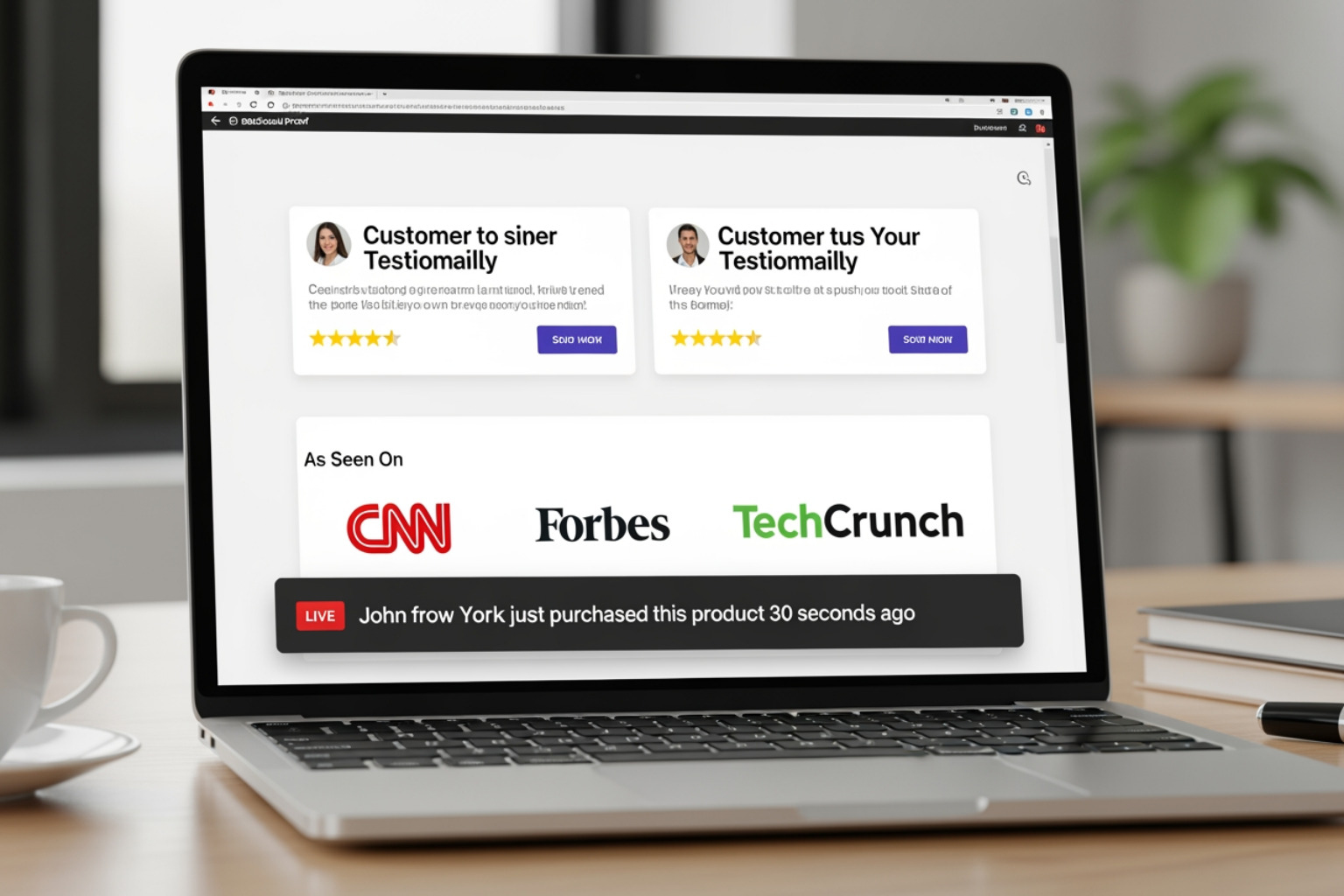
The key is transparency and value. If you use scarcity, it should be real scarcity. If you use social proof, it must be based on genuine reviews. The goal is to reduce the "friction" of decision-making for a product that actually solves the customer's problem.
As mentioned, "Sold Out" serves as a powerful signal of social proof. It tells the customer that many other people wanted this product so much that it's gone. It validates the customer's taste and increases the desirability of the item for when it returns.
Understanding human psychology in marketing is no longer a "nice-to-have"—it's a requirement for any tech brand looking to cut through the noise. By integrating behavioral science into your strategy, you move from guessing what might work to knowing why your customers do what they do.
At CRISPx, based in Newport Beach, CA, we don't just build brands; we build psychological foundations. Whether through LaunchX to establish brand value or OrbitX to drive growth, our DOSE Method™ ensures your marketing resonates on a primal level.
Ready to leverage the power of psychology for your next launch? Launch your tech brand with CRISPx and turn consumer behavior into your greatest competitive advantage.




Accessibility: If you are vision-impaired or have some other impairment covered by the Americans with Disabilities Act or a similar law, and you wish to discuss potential accommodations related to using this website, please contact our Accessibility Manager at (949) 791-9150